Eight Classics of the Japanese Drugstore Shelf — and Which Ones Can Fly Home With You
The patches, ointments, throat powders and painkillers every visitor reaches for — each one checked against the official border rules of the US, UK, EU and Australia before you buy, not at the airport.
Advertising disclosure. This page contains affiliate links — advertising. If you buy through a link on this site, we may earn a commission, at no extra cost to you. Prices and conditions shown here were checked against the providers' official pages on the dates stated and may have changed since. This site is a research desk: everything here is compiled from publicly available information, not from personal use, and nothing on this page is a personal endorsement based on first-hand experience.
Japanese drugstores are a souvenir stop in their own right: shelves of eye drops, medicated patches, throat powders and ointments that Japanese households have bought for generations. The catch nobody mentions at the shelf is that whether any of them can legally fly home with you depends entirely on its active ingredient list — not on its fame, and not on the fact that it sells freely without a prescription in Tokyo. A household classic may be classified abroad as a controlled substance, an unapproved drug, or a restricted botanical. This guide checks eight of the most familiar names on the shelf against the official border rules of the United States, the United Kingdom, the European Union and Australia.
How to read the verdicts
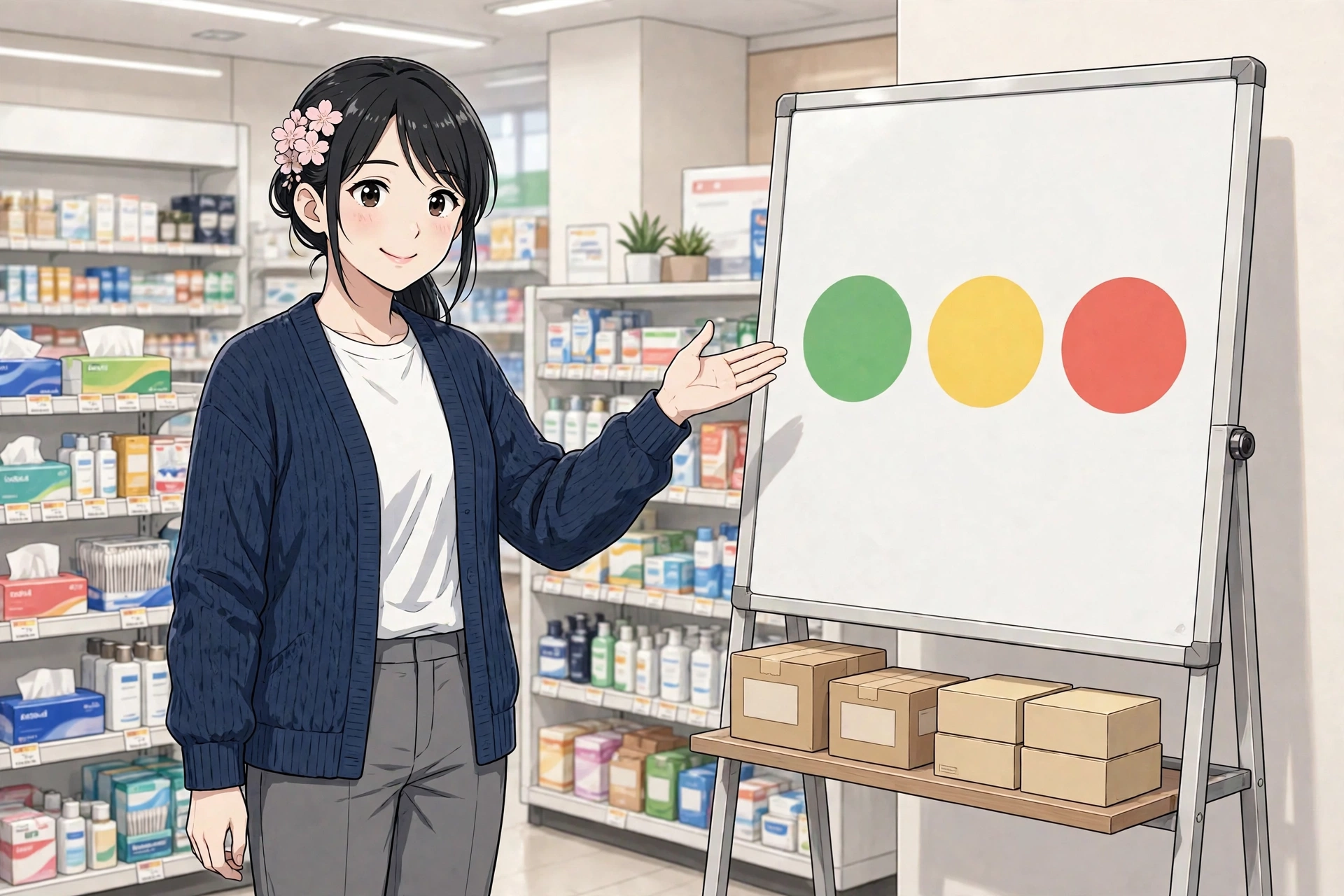
Each product carries a verdict for each of the four markets, drawn from the official sources cited at the end:
- 🟢 Fine in normal personal quantities, within the traveller rules below.
- 🟡 Grey — declare it, or do not rely on bringing it: the rules rely on enforcement discretion, or no traveller-facing authorisation exists.
- 🔴 Do not pack — prohibited, controlled, or certain to fail the traveller conditions in practice.
In the United States, travellers declare all medications and keep them in their original containers; around a 90-day supply is the accepted rule of thumb. The FDA's personal-importation policy is enforcement discretion, not a legal right — and it does not extend to products that appear to present a health risk. Controlled substances sit under the DEA regime.
In the United Kingdom, GOV.UK guidance allows up to a three-month supply of your medicine. Medicine containing a controlled drug must be carried in hand luggage, and may be taken away at the border if you cannot prove it was prescribed for you — the Home Office personal-import policy covers controlled medicines lawfully prescribed to you in your home country, and an over-the-counter purchase made abroad is not a prescription. Codeine and dihydrocodeine are Class B controlled drugs in the UK.
The European Union has no single rule — member states enforce their own. Germany's Zoll, used here as the worked example, allows medicines for personal needs up to a three-month supply at the recommended dose, including products bought abroad; but Narcotics Act (BtMG) substances must be specially doctor-prescribed, with prescription and certificate paperwork.
In Australia, the Office of Drug Control (ODC) requires travellers to declare all medicines on arrival. Under the traveller's exemption, up to a three-month supply in original packaging is permitted, and prescription medicines must be accompanied by the prescription or a doctor's letter. The ODC is explicit that all codeine medicines require a prescription or a doctor's letter — there is no over-the-counter exception.
Import regulations and drug schedules change over time; travellers should verify current requirements with their destination authority before flying. The verdicts presented in this article were verified against official source documents on 7 November 2026.
About the package photos: Japanese packaging is Japanese-only, so every product below carries its maker's official package photo — match the colours and shapes on the shelf. Each photo is credited and links to the maker's official product page.
The all-clear shelf
Salonpas — the patch
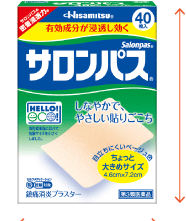
The maker, Hisamitsu, labels the classic Japanese Salonpas for stiff shoulders, back pain, muscle pain, muscle fatigue, bruises, sprains, joint pain, and chilblains.
The labelled active ingredients per 100 g of plaster in the classic Japanese formulation are methyl salicylate (10.0 g), l-menthol (3.0 g), and tocopherol acetate (2.0 g). Notably, the classic Japanese formulation contains no camphor.
Travellers comparing products should note that Hisamitsu markets different formulations under the Salonpas brand in foreign markets under US FDA labels. The US "Pain Relief Patch" formulation contains menthol (3%) and methyl salicylate (10%), whereas the US "Pain Relieving Patch" formulation contains camphor (3.1%), menthol (6.0%), and methyl salicylate (10%).
Border verdict: 🟢 US · 🟢 UK · 🟢 EU · 🟢 Australia — Topically applied methyl salicylate and menthol plasters are widely permitted for personal import across all four jurisdictions.
Oronain H Ointment — the orange tube
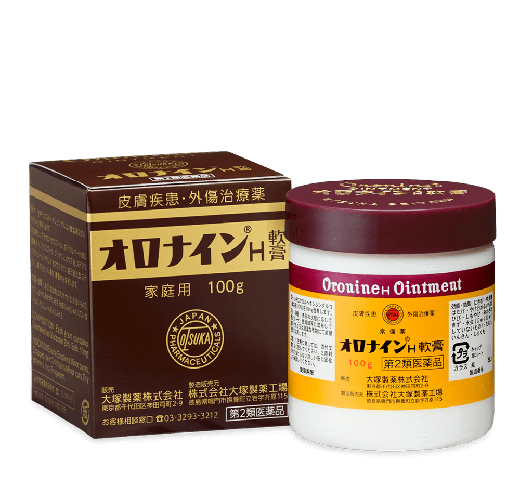
The maker, Otsuka, labels Oronain H Ointment for acne, spots, eczema patches, minor burns, cracks, chilblains, chapped skin, cuts, non-oozing athlete's foot, ringworm, jock itch, and favus.
The sole active ingredient declared on the label is chlorhexidine gluconate solution (20%) at 10 mg per 1 g of ointment.
Otsuka completed the formulation in 1952 and launched it in 1953, in Naruto, Tokushima. The name comes from Oronite Chemical. The ointment was renamed Oronain D in 1969, then Oronain H in 1972 — the "H" stands for hexidine.
Border verdict: 🟢 US · 🟢 UK · 🟢 EU · 🟢 Australia — Antiseptic ointments based on chlorhexidine gluconate fall within standard personal allowance rules for all four border authorities.
Muhi S cream — the plain anti-itch cream
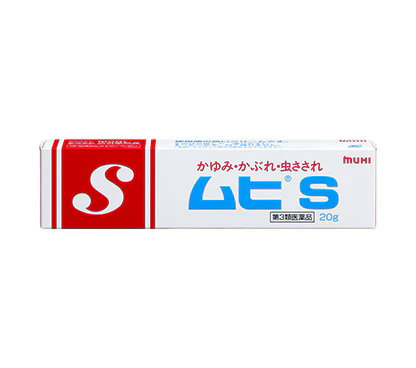
The maker, Ikeda Mohando, labels the plain Muhi S cream for itching, insect bites, contact rash, eczema, hives, heat rash, chilblains, dermatitis, and sores.
Supplied in a 20 g tube, the labelled active ingredients per 100 g of cream are diphenhydramine (1.0 g), glycyrrhetinic acid (0.3 g), l-menthol (5.0 g), dl-camphor (1.0 g), and isopropylmethylphenol (0.1 g).
Travellers must exercise caution regarding brand variants: liquid Muhi S2a contains dexamethasone acetate, while Muhi Alpha EX contains prednisolone valerate acetate. Both of those alternative variants contain topical corticosteroids. The green border verdict applies strictly to the plain Muhi S cream formulation.
Border verdict: 🟢 US · 🟢 UK · 🟢 EU · 🟢 Australia — The active ingredients in plain Muhi S cream are permitted in personal non-prescription quantities across all four destinations.
Four classics with catches
Ryukakusan — the throat powder
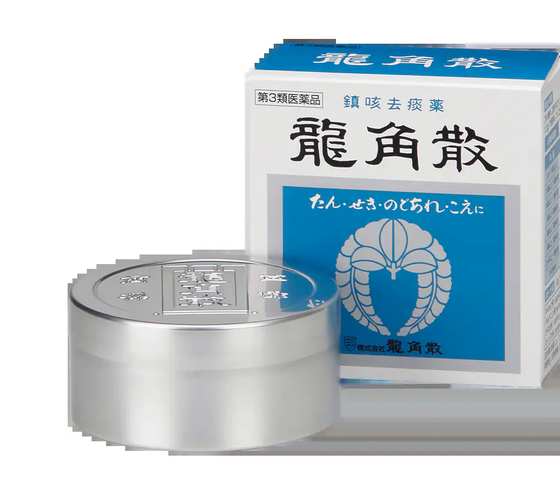
The maker labels Ryukakusan powder for cough, phlegm, and the hoarseness, roughness, discomfort, pain and swelling of the throat that come with throat inflammation. The label's method is part of the ritual: the fine powder goes directly on the tongue and is allowed to reach the throat without water.
Per adult daily dose of 1.8 g, the declared active ingredients are platycodon root powder (70 mg), apricot kernel (5.0 mg), senega root powder (3.0 mg), and liquorice powder (50 mg). The formulation consists entirely of botanical crude drugs.
Ryukakusan began as a house medicine of the Akita (Satake) domain, developed by physicians of the Fujii clan; the company was founded in 1871 in Kanda, Tokyo, and the fine-powder form dates to 1893. The one catch is Australia: plant material is declared on the Incoming Passenger Card, and apricot kernel is one of the powder's four herbs — while amygdalin (laetrile) appears on Australia's prohibited-imports list in its isolated form. A sealed commercial medicine is a different case from raw kernels or isolated amygdalin, but this is the one "herbal" product here where Australia does not get a clean green: declare it, and expect possible questions. Note also that Ryukakusan Direct is a different, six-herb formula.
Border verdict: 🟢 US · 🟢 UK · 🟢 EU · 🟡 Australia — Cleared for personal import in the US, UK, and EU, but requires mandatory declaration at Australian customs due to plant material reporting regulations.
Rohto Cool 40α — the eye drops
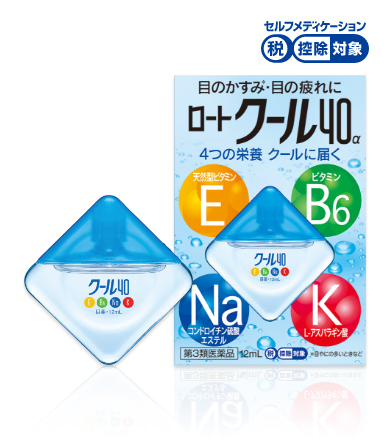
The maker, Rohto, labels Cool 40α for tired eyes, conjunctival congestion, itchy eyes, prevention of eye disease after swimming or dust exposure, blepharitis, blurred vision with heavy discharge, and discomfort while wearing hard contact lenses.
The active ingredients declared on the label are d-α-tocopherol acetate (0.05%), vitamin B6 (0.1%), sodium chondroitin sulfate (0.1%), potassium L-aspartate (1%), neostigmine methylsulfate (0.005%), and chlorpheniramine maleate (0.03%). Notably, this formulation contains no decongestant vasoconstrictors such as tetrahydrozoline or naphazoline.
The border complication involves neostigmine methylsulfate. In Australia, neostigmine is listed under Schedule 4 of the Poisons Standard as a prescription-only substance, with no exception made for ophthalmic drop formulations. Bringing Schedule 4 items into Australia under the traveller's exemption requires a valid prescription or doctor's letter. In the United States, neostigmine is not an approved over-the-counter ophthalmic ingredient, placing unapproved foreign eye drops under FDA personal import discretion.
Border verdict: 🟡 US · 🟡 UK · 🟡 EU · 🔴 Australia — Red for Australia due to Schedule 4 prescription classification for neostigmine; grey in the US, UK, and EU where unapproved foreign OTC ophthalmic formulations lack statutory import guarantees.
Seirogan — the stomach classic
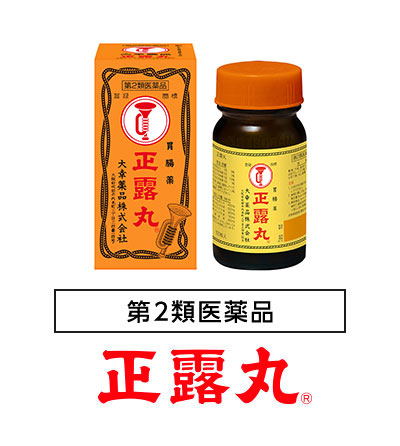
The maker, Taiko Pharmaceutical, labels Seirogan for loose stools, diarrhoea (including food- and water-related cases), vomiting with diarrhoea, diarrhoea from indigestion, and toothache from dental caries.
Per 9 pills — the adult maximum daily dose — the labelled actives are Japanese Pharmacopoeia (JP) wood creosote (400 mg), gambir powder (200 mg), phellodendron bark powder (300 mg), glycyrrhiza powder (150 mg), and citrus unshiu peel powder (300 mg). Taiko stresses that JP wood creosote is a crude-drug substance, entirely different from industrial coal-derived creosote oil.
The name carries its history: in 1902 Saichi Nakajima obtained the Osaka sales licence for "Chūyū Seirogan"; in 1904, during the Russo-Japanese War, the pills were made by the military as 征露丸 — its first character read "conquer", its second an abbreviation for Russia — and distributed to the Army and Navy. Taiko inherited the rights in 1946; the character was later changed from 征 to 正, and the trademark was registered in 1959. The border problem is Australia: the Poisons Standard schedules creosote by wood source — beechwood-derived creosote is a Schedule 7 dangerous poison, while creosote from other woods sits in Schedule 2 or 6 with a 10% threshold for therapeutic use. The maker does not state the source, so the product cannot be cleared for Australia on current evidence. In the United States, wood creosote is not an approved over-the-counter antidiarrhoeal ingredient, which leaves the bottle in FDA enforcement-discretion territory.
Border verdict: 🟡 US · 🟡 UK · 🟡 EU · 🔴 Australia — Red for Australia because its scheduling turns on a wood source the maker does not state; grey in the US, UK and EU, where the product sits in unapproved / unlicensed-medicine territory rather than under any traveller authorisation.
Eve A — the painkiller with a retired sedative
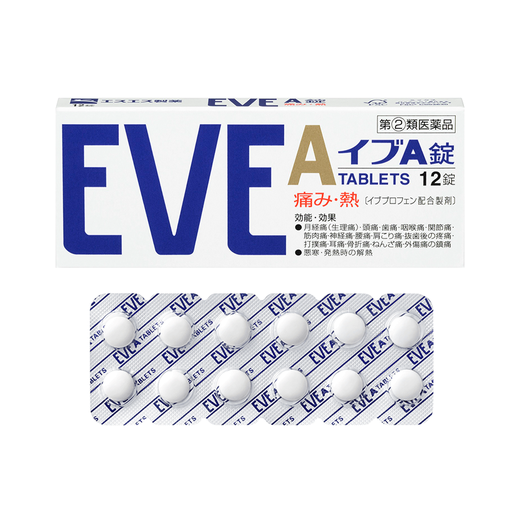
The maker, SS Pharmaceutical, labels Eve A for menstrual pain, headache, toothache, sore throat, joint, muscle and nerve pain, back and stiff-shoulder pain, post-extraction pain, bruise pain, ear pain, fracture pain and sprain pain, and for chills and fever.
The labelled active ingredients per 2 tablets are ibuprofen (150 mg), allylisopropylacetylurea (apronal) (60 mg), and anhydrous caffeine (80 mg).
The third ingredient is the problem. Apronal is a sedative most of the world retired decades ago, and Australia's Therapeutic Goods Administration (TGA) issued a safety alert on 31 May 2023 naming EVE products directly: apronal sits in Schedule 10 of the Poisons Standard — substances "of such danger to health as to warrant prohibition of sale, supply and use" — importing it is illegal, and "if these tablets are found at the border by the ABF, they will be seized and destroyed." In the United States, apronal has never been an approved ingredient, and FDA personal-importation discretion does not extend to products that appear to present a health risk. In the UK and the EU, apronal is not a controlled narcotic — but it is an unmarketed, long-withdrawn sedative, and no traveller-facing authorisation covers unlicensed medicines, so the honest verdict there is grey, not green.
Border verdict: 🔴 US · 🟡 UK · 🟡 EU · 🔴 Australia — Prohibited in Australia (Schedule 10 border seizure) and the US (unapproved sedative); grey in the UK and EU due to lack of personal import protection for unlicensed foreign sedatives.
The hard stop: Pabron Gold A
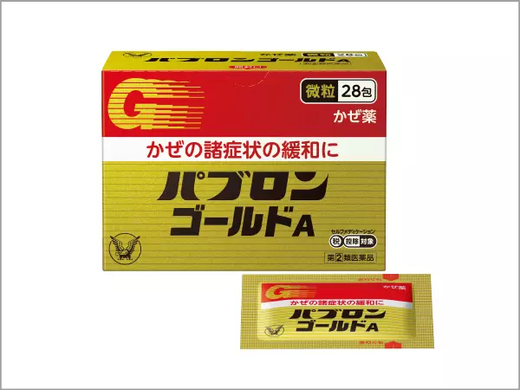
The maker, Taisho, labels Pabron Gold A for the relief of the various symptoms of a cold — cough, phlegm, sore throat, sneezing, runny nose, blocked nose, chills, fever, headache, joint pain, muscle pain.
The full declared active ingredient list per sachet is:
- Guaifenesin: 60 mg
- Dihydrocodeine phosphate: 8 mg
- dl-Methylephedrine hydrochloride: 20 mg
- Acetaminophen: 300 mg
- Chlorpheniramine maleate: 2.5 mg
- Anhydrous caffeine: 25 mg
- Riboflavin: 4 mg
The second line of that list is the whole story: dihydrocodeine phosphate is a codeine-family controlled substance, and every regime in this guide handles it through prescription rules. An over-the-counter purchase in Japan has no prescription behind it — and that single fact fails the traveller conditions in all four directions:
- United States 🔴 — dihydrocodeine sits in the DEA controlled-substance regime; the personal-use route presumes lawfully prescribed medical use, which an OTC purchase is not.
- United Kingdom 🔴 — dihydrocodeine is a Class B controlled drug; GOV.UK states that controlled-drug medicine may be taken away at the border if you cannot prove it was prescribed for you, and the personal-import policy covers only medicines lawfully prescribed in your home country.
- European Union 🔴 — Germany's official customs guidance requires Narcotics Act (BtMG) substances to be specially doctor-prescribed, with prescription and certificate paperwork an OTC box does not have.
- Australia 🔴 — the ODC states that all codeine medicines require a prescription or a doctor's letter.
- Singapore 🔴 — for readers travelling on to Singapore: codeine and dihydrocodeine are on the Health Sciences Authority's Appendix A controlled list, so bringing this in requires prior HSA approval, applied for at least two weeks before arrival.
Japan itself is tightening up too: from 1 May 2026, oral medicines containing dihydrocodeine or methylephedrine are designated abuse-prevention medicines in Japan, with purchase-quantity controls at the till. And the standing warning of this whole guide applies inside the brand as well: the Pabron line is not uniform — Pabron S tablets, for instance, use dextromethorphan instead, while the flagship covered next shares Gold A's decisive ingredient. Judge the exact product's ingredient panel, never the brand.
Border verdict: 🔴 US · 🔴 UK · 🔴 EU · 🔴 Australia — Prohibited across all four jurisdictions without a valid medical prescription; requires advance written government approval in Singapore.
Pabron S Gold W — the heavy artillery
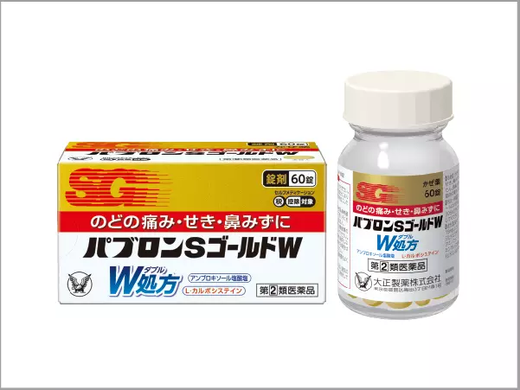
If Gold A is the household standard, the flagship of the Pabron line is Pabron S Gold W — the box with the heavyweight reputation, and the current form of the "Gold S" name (it succeeded the older Pabron S Gold, whose formula was different again). Taisho markets it as the premium Pabron, built around the airway lining, and publishes the results of the clinical study filed with its approval application: 125 patients with mild-to-moderate cold syndrome, of whom 98.4% were rated as improved at least mildly. That published figure is the documented core of the product's "famously powerful" reputation — it is quoted here as the maker's data, not as this site's endorsement; this guide does not test medicines.
The maker labels S Gold W — sold as tablets and as granules, with identical actives per dose — for the relief of the same eleven cold symptoms as Gold A: sore throat, cough, runny nose, blocked nose, sneezing, phlegm, headache, fever, chills, joint pain, muscle pain.
The declared actives per dose (2 tablets, or one 0.96 g sachet) are:
- Ambroxol hydrochloride: 15 mg — labelled to loosen the stubborn phlegm that clings in the throat
- L-Carbocisteine: 250 mg — labelled to bring airway mucus and the airway lining back toward their normal state
- Dihydrocodeine phosphate: 8 mg — labelled to act on the cough centre
- Acetaminophen: 300 mg
- Chlorpheniramine maleate: 2.5 mg
- Riboflavin: 4 mg
The "W" is the maker's shorthand for the first two ingredients working as a pair — one to clear the airway lining, one to repair it. The third ingredient, however, is the same codeine-family controlled substance as in Gold A, at the same 8 mg dose. This guide checked S Gold W's own ingredient list against each authority rather than copying Gold A's row: the two expectorants raise no border flags of their own — ambroxol and carbocisteine are ordinary pharmacy ingredients in much of Europe — but the dihydrocodeine fails the traveller conditions in the United States, the United Kingdom, Germany and Australia for exactly the reasons set out above, and Singapore requires advance HSA approval. The identical verdict row below is a checked result, not an assumption.
None of this changes the box's standing at home. S Gold W is an ordinary over-the-counter medicine in Japan: a traveller who catches a cold in Japan can buy it at any drugstore and use it in Japan exactly as its label directs. The maker's insert sets the expected terms for a codeine-containing cold medicine — never combine it with other cold medicines, cough suppressants or antihistamine-containing products; it causes drowsiness, so do not drive after taking it; do not drink alcohol around it; never exceed the stated dose; do not use it long-term; and it is not for children under 12. The abuse-prevention designation described above applies to this box too — it contains dihydrocodeine, so purchase quantities are controlled at the till. What the border verdicts govern is only the flight home. This is the "use it here, don't pack it" case in its purest form: we cannot recommend carrying the famous box home — and the border says the same.
Border verdict: 🔴 US · 🔴 UK · 🔴 EU · 🔴 Australia — Identical to Gold A, and checked ingredient by ingredient: a codeine-family controlled substance with no prescription behind the purchase fails the traveller conditions in all four; Singapore requires advance written government approval.
The verdict table
| Product | 🇺🇸 US | 🇬🇧 UK | 🇪🇺 EU | 🇦🇺 Australia |
|---|---|---|---|---|
| Salonpas | 🟢 | 🟢 | 🟢 | 🟢 |
| Oronain H Ointment | 🟢 | 🟢 | 🟢 | 🟢 |
| Muhi S cream | 🟢 | 🟢 | 🟢 | 🟢 |
| Ryukakusan powder | 🟢 | 🟢 | 🟢 | 🟡 (declare) |
| Rohto Cool 40α | 🟡 | 🟡 | 🟡 | 🔴 |
| Seirogan | 🟡 | 🟡 | 🟡 | 🔴 |
| Eve A | 🔴 | 🟡 | 🟡 | 🔴 |
| Pabron Gold A | 🔴 | 🔴 | 🔴 | 🔴 |
| Pabron S Gold W | 🔴 | 🔴 | 🔴 | 🔴 |
Every line checked 7 November 2026 against official border and regulatory sources; rules change over time.
The 60-second shelf routine
- Photograph the ingredient panel: Before purchasing, take a clear photograph of the active ingredients box (有効成分) on the outer packaging.
- Check the maker's official page for the exact product: Verify the precise product variant, as items sharing a brand name (such as Muhi cream versus liquid Muhi, or Pabron Gold A versus Pabron S Gold W versus Pabron S) contain entirely different active compounds.
- Check your home authority's traveller page: Cross-reference the active compounds against traveller databases published by your home border authority (such as the US FDA/CBP, UK Home Office, German Zoll, or Australian TGA/ODC).
- When in doubt, declare it or leave it: If an active substance is classified as controlled, prescription-only, or prohibited in your home country, declare it fully on your customs declaration form or leave the product in the store.
A medicine you declare and lose costs you the price of the box. One you don't declare can cost you the trip.
Sources
- Taisho Pharmaceutical: Official product information pages for Pabron Gold A and Pabron S Gold W (product catalogue and Pabron brand site), and the PMDA package insert for Pabron S Gold W (May 2026 revision), accessed 7 November 2026.
- SS Pharmaceutical: Official product information page for Eve A, accessed 7 November 2026.
- Hisamitsu Pharmaceutical: Official product information page for Salonpas; US FDA product labels via DailyMed, accessed 7 November 2026.
- Otsuka Pharmaceutical: Official product history and ingredient page for Oronain H Ointment, accessed 7 November 2026.
- Ikeda Mohando: Official product pages for Muhi S cream, liquid Muhi S2a, and Muhi Alpha EX, accessed 7 November 2026.
- Ryukakusan Co., Ltd.: Official product pages and company history for Ryukakusan powder, accessed 7 November 2026.
- Taiko Pharmaceutical: Official product history and crude-drug composition pages for Seirogan, accessed 7 November 2026.
- Rohto Pharmaceutical: Official product information page for Rohto Cool 40α, accessed 7 November 2026.
- US Customs and Border Protection & Food and Drug Administration: CBP guidance on travelling with medication; FDA personal importation policy; DEA personal-use exemption (21 CFR 1301.26), accessed 7 November 2026.
- GOV.UK & UK Home Office: "Take medicine in or out of the UK" guidance and Controlled Drugs list, accessed 7 November 2026.
- German Customs (Zoll): Regulatory provisions on medicinal products and narcotics (BtMG), accessed 7 November 2026.
- Australian Office of Drug Control & Therapeutic Goods Administration: Travellers exemption guide, TGA Safety Alert "EVE Allylisopropylacetylurea tablets" (31 May 2023), and the Poisons Standard, accessed 7 November 2026.
- Singapore Health Sciences Authority (HSA): Personal import guidance for controlled substances (Appendix A), accessed 7 November 2026.
Advertising disclosure. This page contains affiliate links — advertising. If you buy through a link on this site, we may earn a commission, at no extra cost to you. Prices and conditions shown here were checked against the providers' official pages on the dates stated and may have changed since. This site is a research desk: everything here is compiled from publicly available information, not from personal use, and nothing on this page is a personal endorsement based on first-hand experience.
More from the shelf: what else survives the flight home — Japanese souvenirs, sorted by where you are flying back to.