Bring Japan Home: A Souvenir Guide by Where You Live
The best souvenir is not the heaviest bag at the airport. It is the thing that, three months later, on an ordinary Tuesday, puts Japan back in the room: the cup you reach for, the doll on the shelf, the tin you open slowly because it is the last one. This guide is organised around that moment — first the objects and foods that carry Japan home best, then, because rules differ sharply by country, a section for each of our readers' homes: the United States, the UK, the EU, and Australia.
Objects that keep Japan in the room
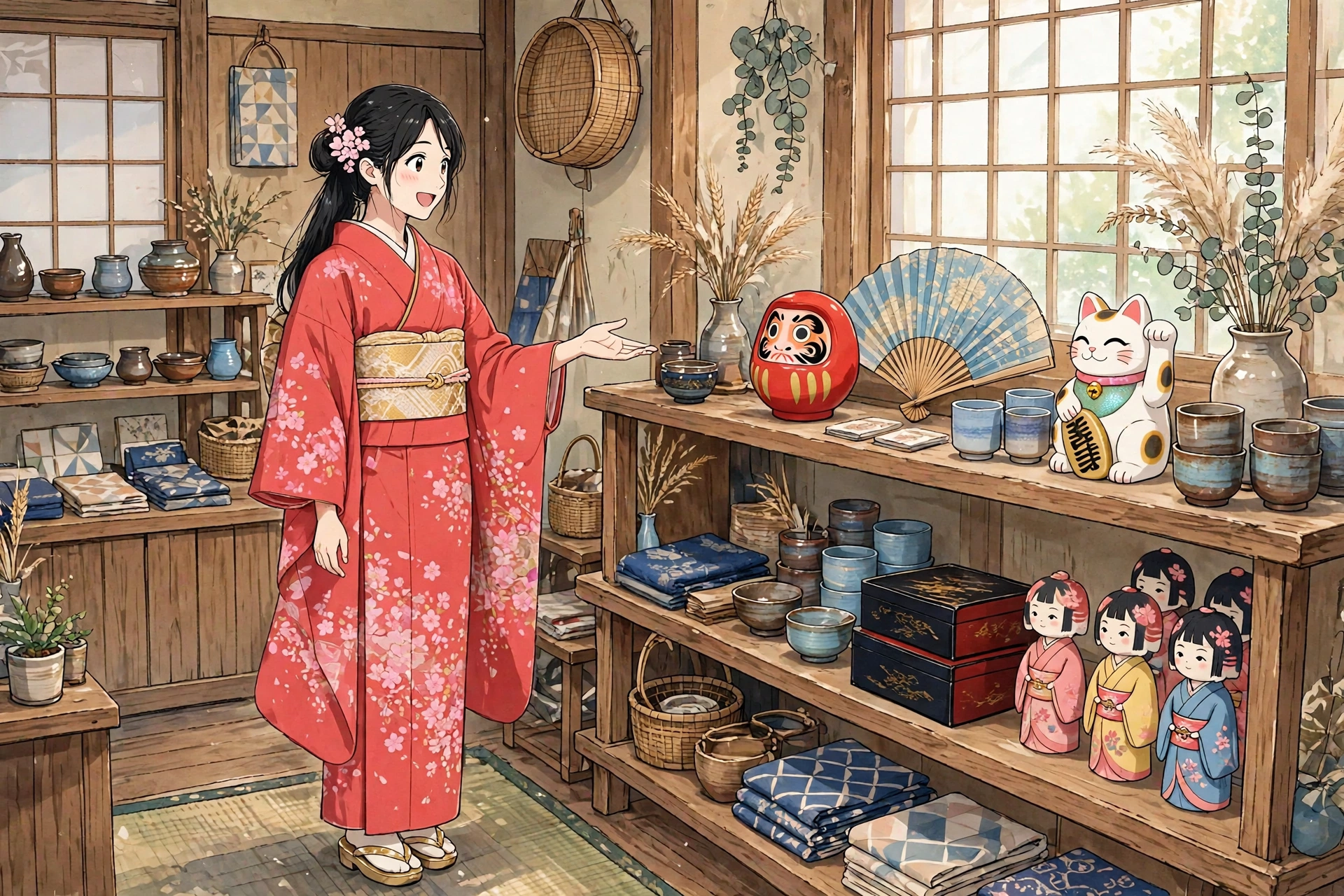
Daruma — the round, red, papier-mâché doll sold at temples and souvenir shops across Japan, one eye painted when you set a goal, the second when you reach it. Light, nearly unbreakable, and it keeps asking you a question from the shelf.
Kokeshi — the limbless wooden dolls of the Tōhoku hot-spring towns, turned and hand-painted for over a century. Each region has its own shape and pattern, which makes them quietly collectible.
Maneki-neko — the beckoning cat of shop counters. Choose ceramic if you want it to outlive the trip by decades.
Sensu (folding fans) and ceramics — a fan disappears into a jacket pocket and reopens summer anywhere; regional pottery (Arita, Kutani, Mashiko and dozens more) turns an ordinary breakfast into a small ceremony.
Flavours that survive the flight
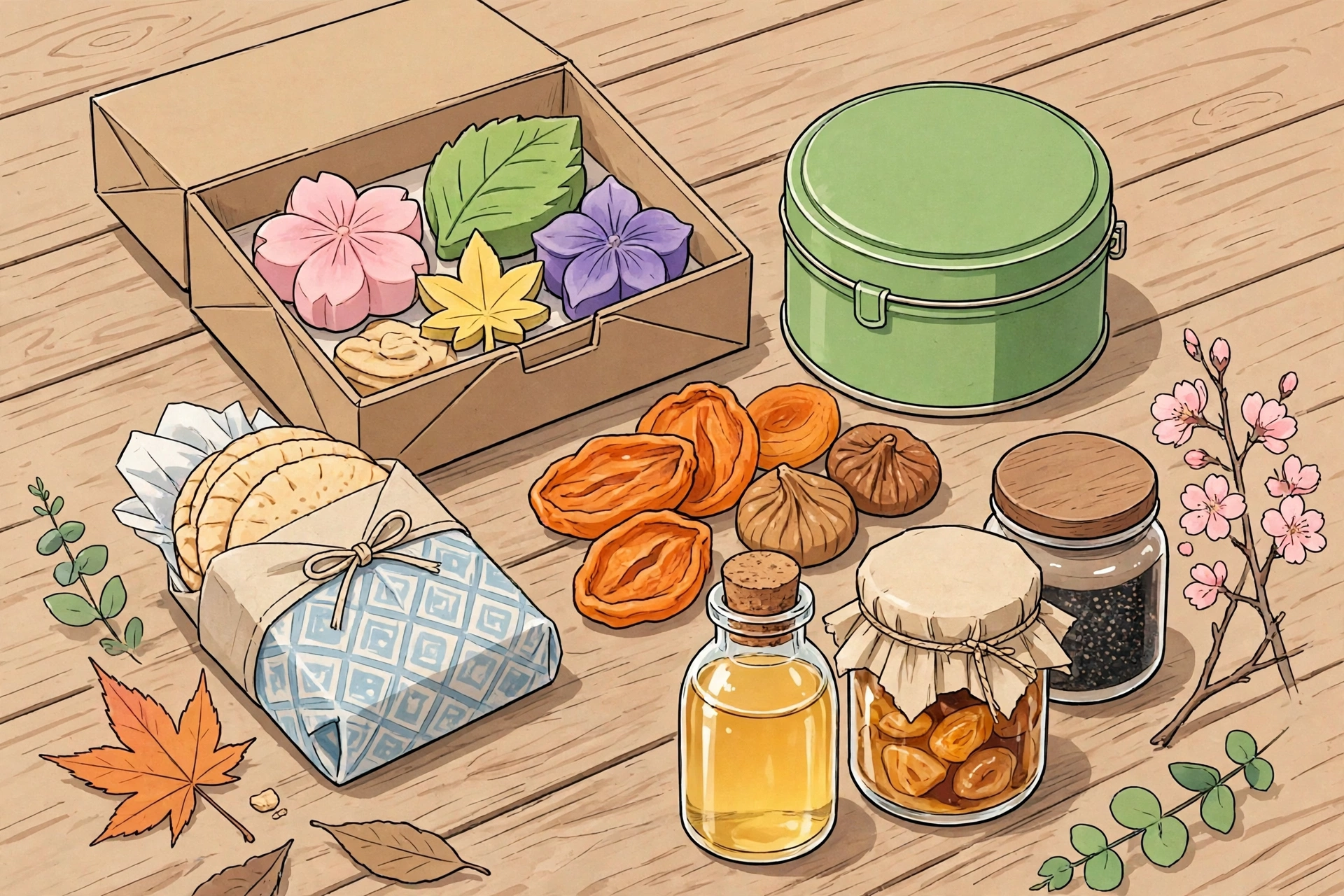
Senbei and arare (rice crackers) — weeks to months of shelf life in sealed packs, light, and nearly indestructible.
Matcha and Japanese tea — Japan in a cup for months. Pure tea travels easily (for the US, expressly allowed in any quantity).
Regional sweets (meika) — every prefecture sells its own famous confection in a beautiful box. This is where the country rules below really matter, because many contain milk, butter or egg.
Dried and preserved foods — dried fruits, sealed pickles, furikake (check ingredients: meat or seafood extracts change the import answer).
The drugstore shelf — beloved, and the one place to be careful
Half the fun of a Japanese drugstore is that it is a souvenir shop in disguise — and its medicine aisle is famous with inbound visitors. The anchor example is Pabron (Taisho Pharmaceutical): a household name in Japan for decades, whose maker labels the Gold A granules for "relief of the various symptoms of a cold (cough, phlegm, sore throat, sneezing, runny nose, blocked nose, chills, fever, headache, joint pain, muscle pain)" — the manufacturer's official wording, quoted from its package insert, and all we will ever say about what it does.
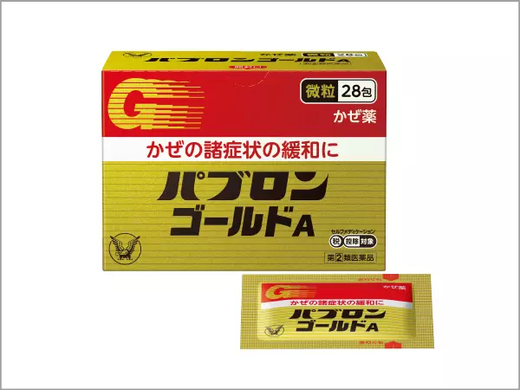
What we can usefully tell you is the border answer: many classic Japanese cold medicines, Pabron included, contain dihydrocodeine — an ordinary over-the-counter component in Japan and a controlled substance almost everywhere our readers live:
- United States: controlled substances bought abroad fall under the DEA's personal-use exemption (21 CFR 1301.26) — original container, oral declaration to customs, and for US residents a hard cap of 50 dosage units in total. A Japanese OTC cold medicine has no US prescription behind it; treat it as do not pack.
- Australia: the Office of Drug Control states that all medications containing codeine require a prescription or a doctor's letter, within the 3-month traveller's exemption. Without one: do not pack.
- EU: rules are national; Germany's customs (Zoll) allows medicines for personal needs up to a 3-month supply, but narcotics-list substances must be doctor-prescribed and carried with the matching certificate. An OTC purchase in Japan has neither: do not pack.
- United Kingdom: codeine is a controlled drug. The Home Office personal-import policy covers only medicines lawfully prescribed to you in your country of residence (up to a 3-month supply, carried on your person, prescriber's letter recommended). A Japanese OTC purchase has no prescription behind it: do not pack.
So the drugstore rule of this site: enjoy reading the shelves, buy medicines to use during the trip if you need them — and let souvenirs in this category be the non-medicine classics. Our per-product research file, with official sources per country, sits in the site backlog and will become a dedicated guide only for products that pass every check.
If you are travelling home to the United States
- Declare every food item. CBP and USDA APHIS require declaration of all agricultural products — and declaring carries no penalty even if an item is then refused. Not declaring is what gets fined.
- Generally admissible: bakery items, candy, chocolate, cured cheese, canned goods without meat (APHIS traveller guidance).
- Prohibited or restricted: most fresh fruit and vegetables; meat and meat products — including meat ingredients such as beef broth in a soup mix.
- Tea: pure tea (Camellia sinensis) is allowed in any quantity.
Source: USDA APHIS, "Traveling with agricultural products from another country" (aphis.usda.gov), accessed 2026-11-07.
If you are travelling home to the EU
- The headline rule (European Commission, "Personal imports", Regulation (EU) 2019/2122): travellers may not bring in meat, milk, or products containing them from outside the EU. That butter-rich baked sweet is, legally, a milk product — eat it on the plane.
- Fishery products up to 20 kg are allowed; other animal products such as honey up to 2 kg (narrow exceptions exist — see the Commission's page).
- Plain senbei, tea, dried plant products and ceramics are the easy wins for EU-bound bags.
Source: European Commission, food safety — "Personal imports" (food.ec.europa.eu), accessed 2026-11-07.
If you are travelling home to the United Kingdom
- Japan counts as "outside the EU" under GOV.UK's food rules — the strict set applies, not the EU set.
- Prohibited: meat and meat products, and milk or milk-based products (the infant/medical-food exceptions aside). The butter-rich baked sweet and the beef-broth soup mix stay in Japan — same trap as the EU, same answer.
- Allowed: fish and fish products up to 20 kg per person; honey up to 2 kg; and, without restriction, bread (no meat/dairy fillings), cakes without fresh cream, biscuits, chocolate and confectionery not made with a lot of unprocessed dairy, pasta and noodles without meat, and packaged soup stocks and flavourings.
- Fresh fruit and vegetables mostly need a phytosanitary certificate — effectively, don't pack them.
- Duty-free allowances (17+): other goods up to £390 per person; alcohol — 42 litres of beer plus 18 litres of still wine, plus either 4 litres of spirits or 9 litres of fortified/sparkling wine; tobacco — one of 200 cigarettes / 100 cigarillos / 50 cigars / 250 g tobacco (splittable). Go over an allowance and duty is due on the full value, not just the excess. Cash of £10,000 or more must be declared.
- If unsure, declare: declare banned food to Border Force and it is simply taken away and destroyed; failing to declare can mean a fine of up to £5,000 in England or prosecution.
Sources: GOV.UK, "Bringing food into Great Britain" (gov.uk) and "Arriving in Great Britain" duty-free allowances; Home Office, "Bringing medicine containing a controlled drug into the UK" — all accessed 2026-11-08.
If you are travelling home to Australia
- Declare all food, plant material and animal products on the Incoming Passenger Card. Declaring carries no penalty under the Biosecurity Act 2015 even if the item is refused; failing to declare can draw an infringement notice of up to A$7,280 and, for visitors, possible visa cancellation (Department of Agriculture guidance, updated October 2026).
- Commercially prepared and packaged foods are generally permitted, subject to conditions — ingredients decide, so keep packaging intact for inspection.
- Wooden souvenirs must be clean and free of seeds, soil, bark and insects; check the BICON database for item-level conditions.
Source: Australian Department of Agriculture, Fisheries and Forestry (agriculture.gov.au), traveller guidance, accessed 2026-11-07.
Plan this trip
- Stay connected from the moment you land: Japan eSIM compared
- Riding the rails between souvenir towns? Our JR Pass break-even guide runs the numbers route by route.
- Still dreaming? Ride along first: four train windows you will never forget
Advertising disclosure. This page contains affiliate links — advertising. If you buy through a link on this site, we may earn a commission, at no extra cost to you. Prices and conditions shown here were checked against the providers' official pages on the dates stated and may have changed since. This site is a research desk: everything here is compiled from publicly available information, not from personal use, and nothing on this page is a personal endorsement based on first-hand experience.