Four Train Windows You Will Never Forget
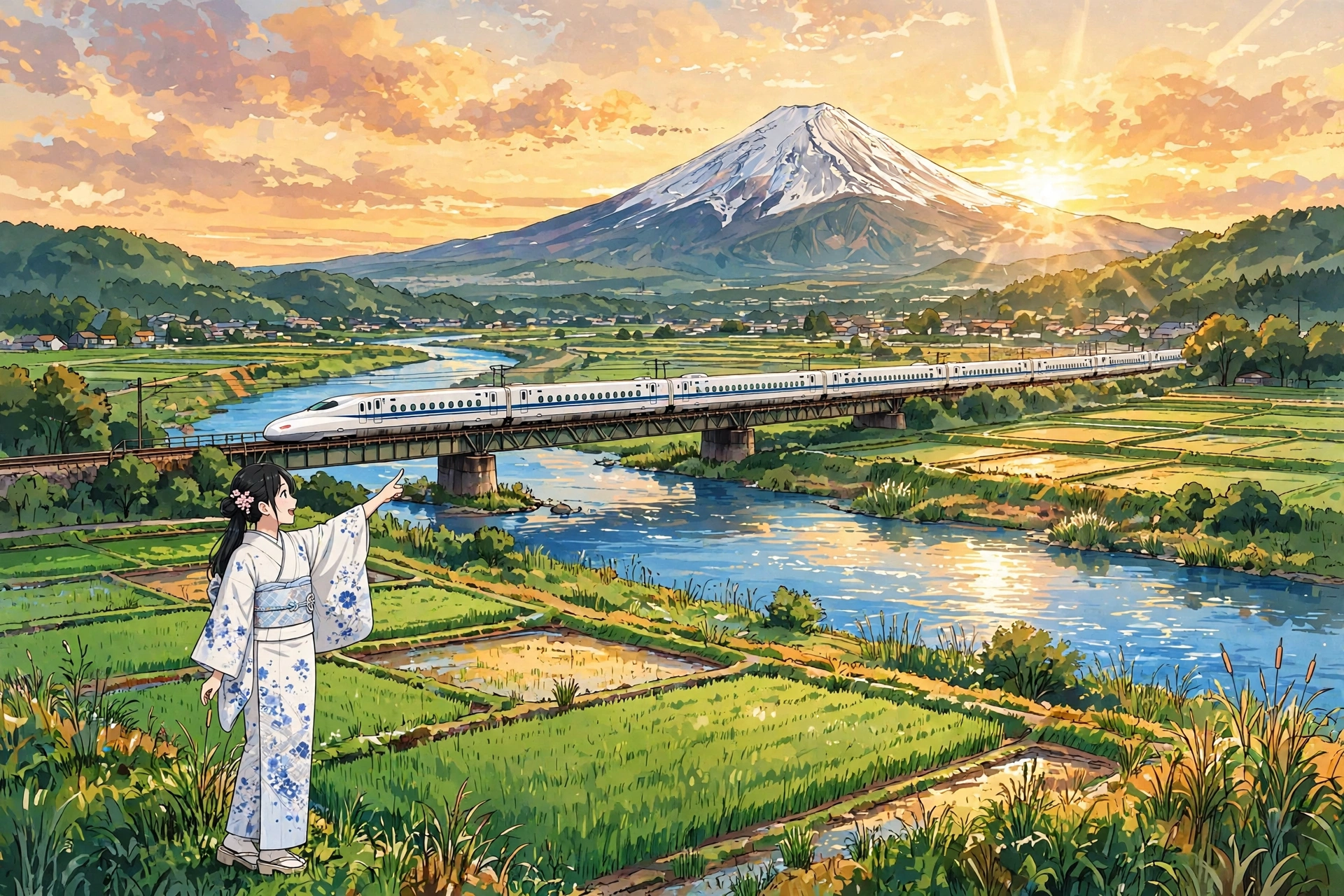
Some countries you visit. Japan you watch — through train windows that behave like cinema screens. The network is famous for speed, but its slower gift is composition: a volcano framed by a river bridge, a gorge in full maple colour, the sea arriving beside a seaside local line, a valley remade by snow. Four windows, four seasons. The planning links are waiting at the bottom.
1. Mt Fuji, from the Tōkaidō Shinkansen
The most famous view in Japanese rail is also the fastest: on the Tōkaidō Shinkansen between Shin-Fuji and Mishima, the mountain fills the windows for a long, silent minute. Heading toward Tokyo, the Fuji side is the sea side (E seats in ordinary cars). Clear winter mornings are the classic; after rain is the gambler's favourite. Cloud is the whole game: the mountain appears and vanishes like a stage effect, and if it hides, the river plain and the sheer speed are still the show — this window does not do bad days, only different ones. It costs nothing extra. It is simply what the window does.
2. The Hozu Gorge, on the Sagano Scenic Railway (Kyoto)
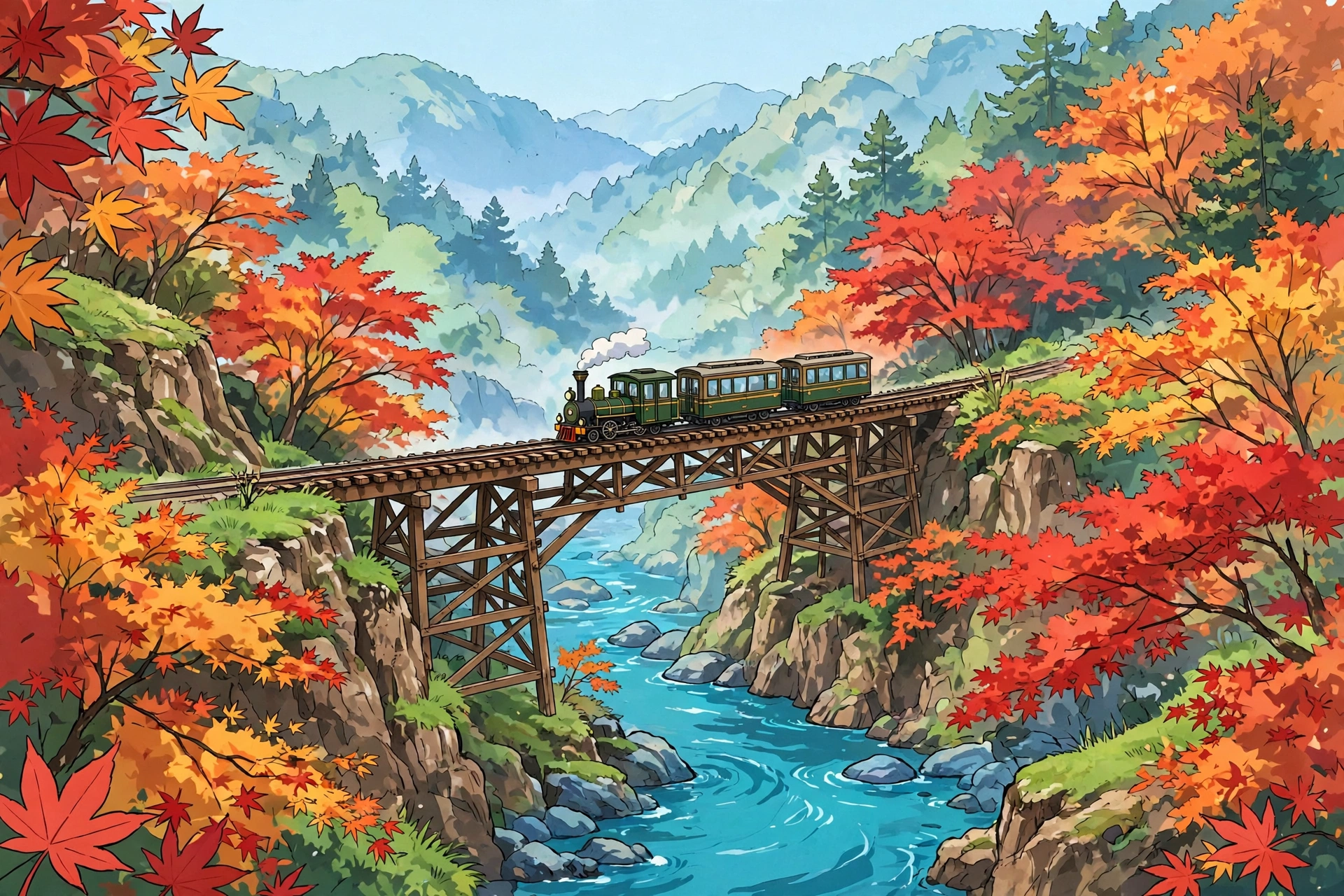
From Torokko Saga, at the edge of Arashiyama, a small sightseeing train leans into the Hozugawa gorge at walking-and-a-half pace — open-sided cars, river below, maples in November, fresh green in May. The run is short (about 25 minutes to Kameoka) and that is exactly right: it is a haiku, not a novel. Book ahead in autumn; the gorge does not do quiet in peak colour.
3. The sea, on the Enoden (Kamakura)
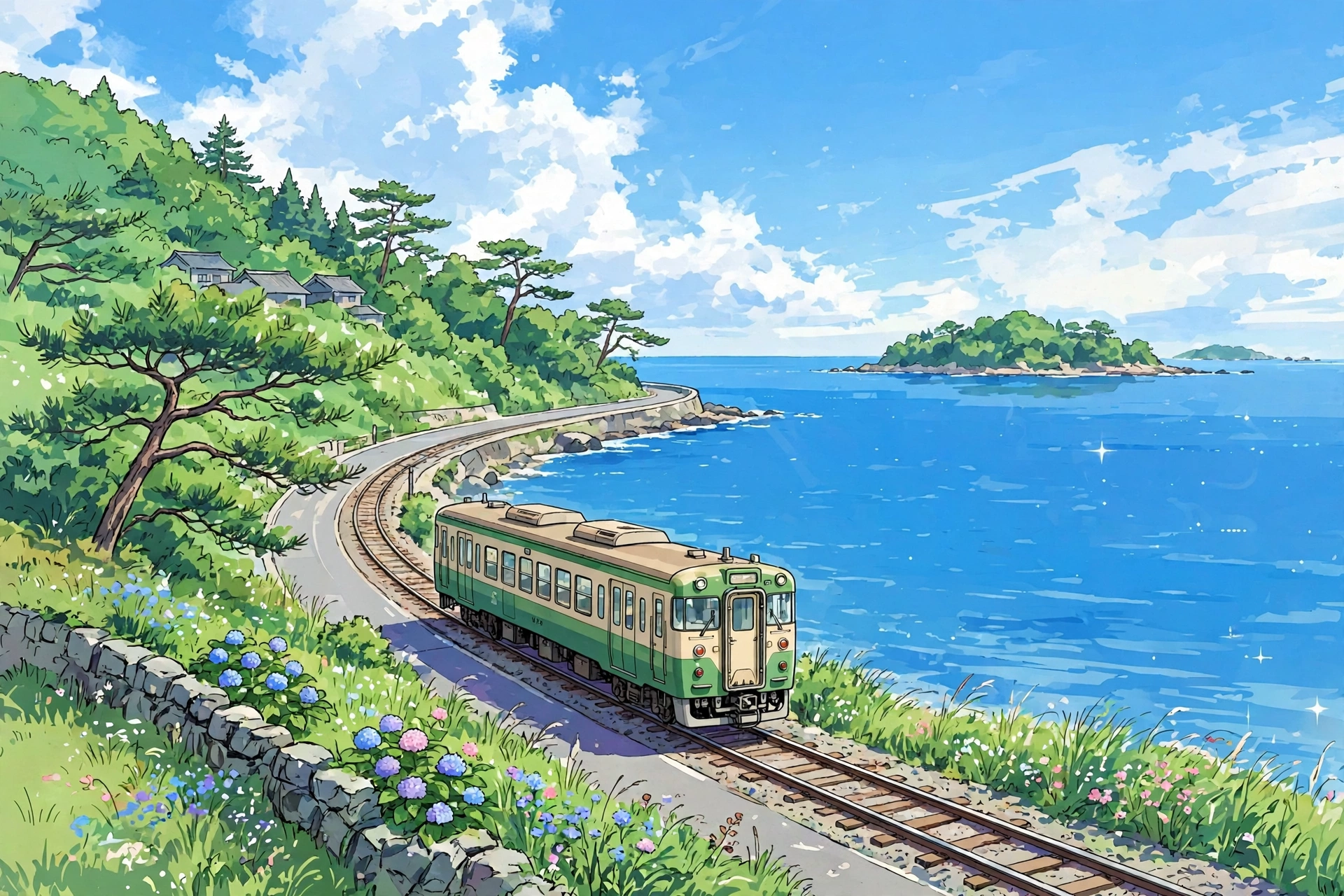
The Enoshima Electric Railway is ten kilometres of pure seaside postcard: single cars threading between houses, then — between Kamakurakōkōmae and Shichirigahama — the Pacific, with Enoshima island sitting in it. In places it simply runs down the street, ringing its bell past kitchen windows and laundry lines, a tram that never stopped being a neighbour. Ride it at golden hour; ride it twice. It is a commuter line that never got the memo about not being famous.
4. Snow country, on the Tadami Line (Fukushima–Niigata)
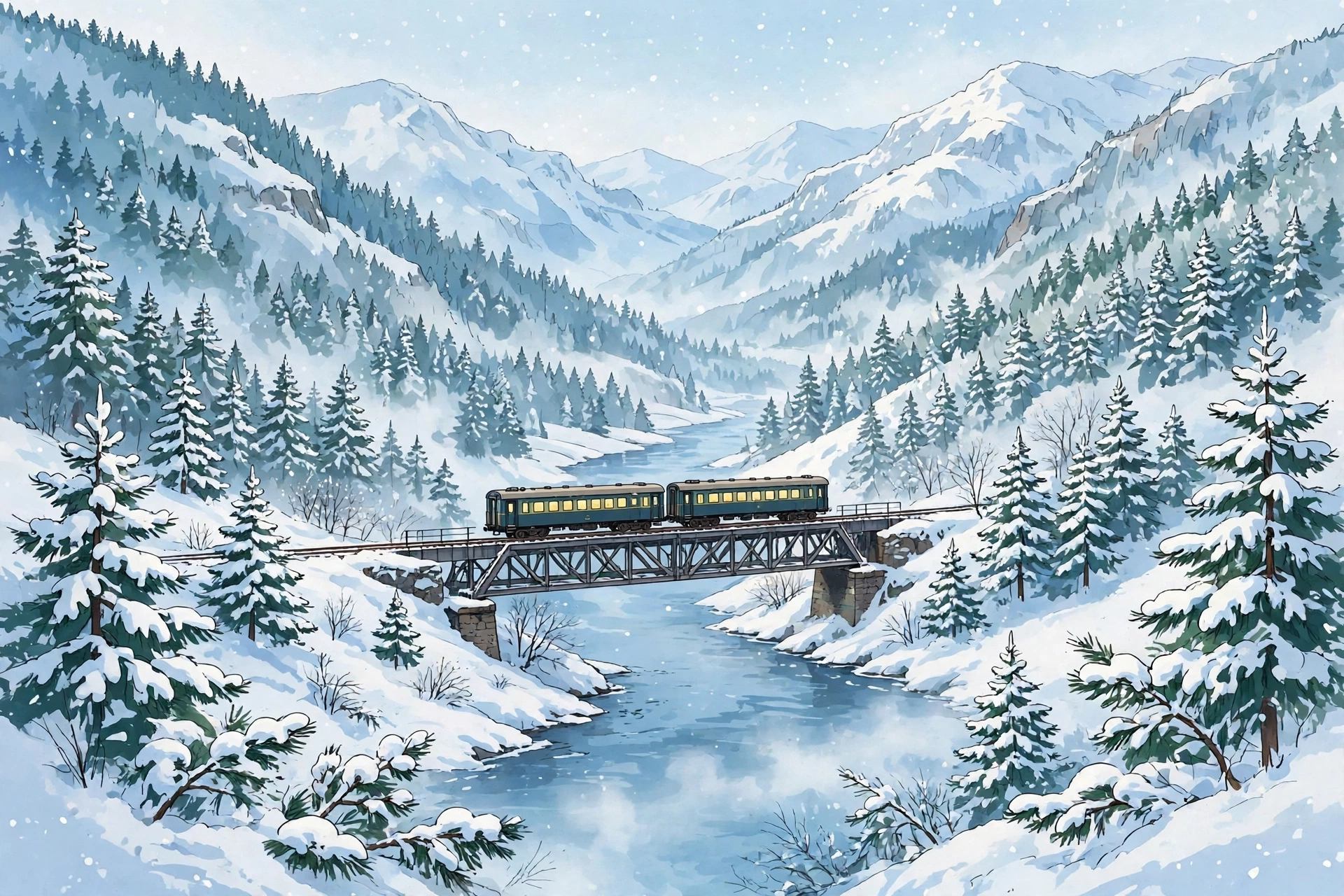
The Tadami Line crosses the Tadami River on bridge after bridge through some of the heaviest snowfall country in Japan. Winter is the point: the valley goes monochrome, the little two-car train goes red-and-cream across the First Tadami River Bridge, and every photographer on earth seems to be standing on the same viewpoint hill — join them; it is worth the cold. The full line reopened in October 2022 after an 11-year closure from flood damage, which makes every crossing a small celebration locals still feel.
One trip, four windows
You do not need four trips. A single classic route collects most of them: ride the Tōkaidō Shinkansen from Tokyo toward Kyoto on a clear morning and Mt Fuji performs from the window before lunch; the Sagano gorge is an afternoon's detour once you are based in Kyoto. The Enoden is a day trip from Tokyo on a different day — Kamakura's temples in the morning, the seaside line at golden hour. Only the Tadami Line asks for its own expedition: a winter detour into the snow country of Aizu, best given a full day and no onward connection to protect. That is the honest shape of it — three windows fold into an ordinary first trip, and the fourth is the reason to come back in winter. Which is, of course, the point of a window you never forget.
Plan this trip
- The money question behind rides like these: our JR Pass break-even guide runs the arithmetic, route by route, checked against published fares.
- Window seats, ekiben and the joy of the ride: our Enjoying the Shinkansen guide is next in the practical queue.
- None of the windows load without data for maps and bookings: Japan eSIM compared.
- Bringing the trip home afterwards: a souvenir guide by where you live.
Facts checked: Tōkaidō Shinkansen Fuji viewing section and seating convention (JR Central public guidance); Sagano Scenic Railway route and duration (operator's public materials); Enoden line and coastal section (Enoshima Electric Railway public materials); Tadami Line full reopening October 2022 (JR East public releases). All accessed via public sources, 2026-11-07. Illustrations are artwork, not photographs.
Advertising disclosure. This page contains affiliate links — advertising. If you buy through a link on this site, we may earn a commission, at no extra cost to you. Prices and conditions shown here were checked against the providers' official pages on the dates stated and may have changed since. This site is a research desk: everything here is compiled from publicly available information, not from personal use, and nothing on this page is a personal endorsement based on first-hand experience.