Luggage in Japan: The 160 cm Rule, Forwarding Prices and Coin Lockers
One size rule decides whether your suitcase needs a special seat on the shinkansen. Here are the rule, the forwarding prices, and when a coin locker beats both.
Advertising disclosure. This page contains affiliate links — advertising. If you buy through a link on this site, we may earn a commission, at no extra cost to you. Prices and conditions shown here were checked against the providers' official pages on the dates stated and may have changed since. This site is a research desk: everything here is compiled from publicly available information, not from personal use, and nothing on this page is a personal endorsement based on first-hand experience.
The short answer
On the Tokaido, Sanyo, Kyushu and Nishi-Kyushu Shinkansen, a bag totalling over 160 cm (length + width + height) needs a reserved seat with an oversized baggage area — free, but book it with your ticket.
Forwarding the bag hotel-to-hotel instead costs roughly ¥2,000–3,200 and takes a day; a coin locker (¥300–1,000/day) solves hours, not journeys.
The 160 cm rule
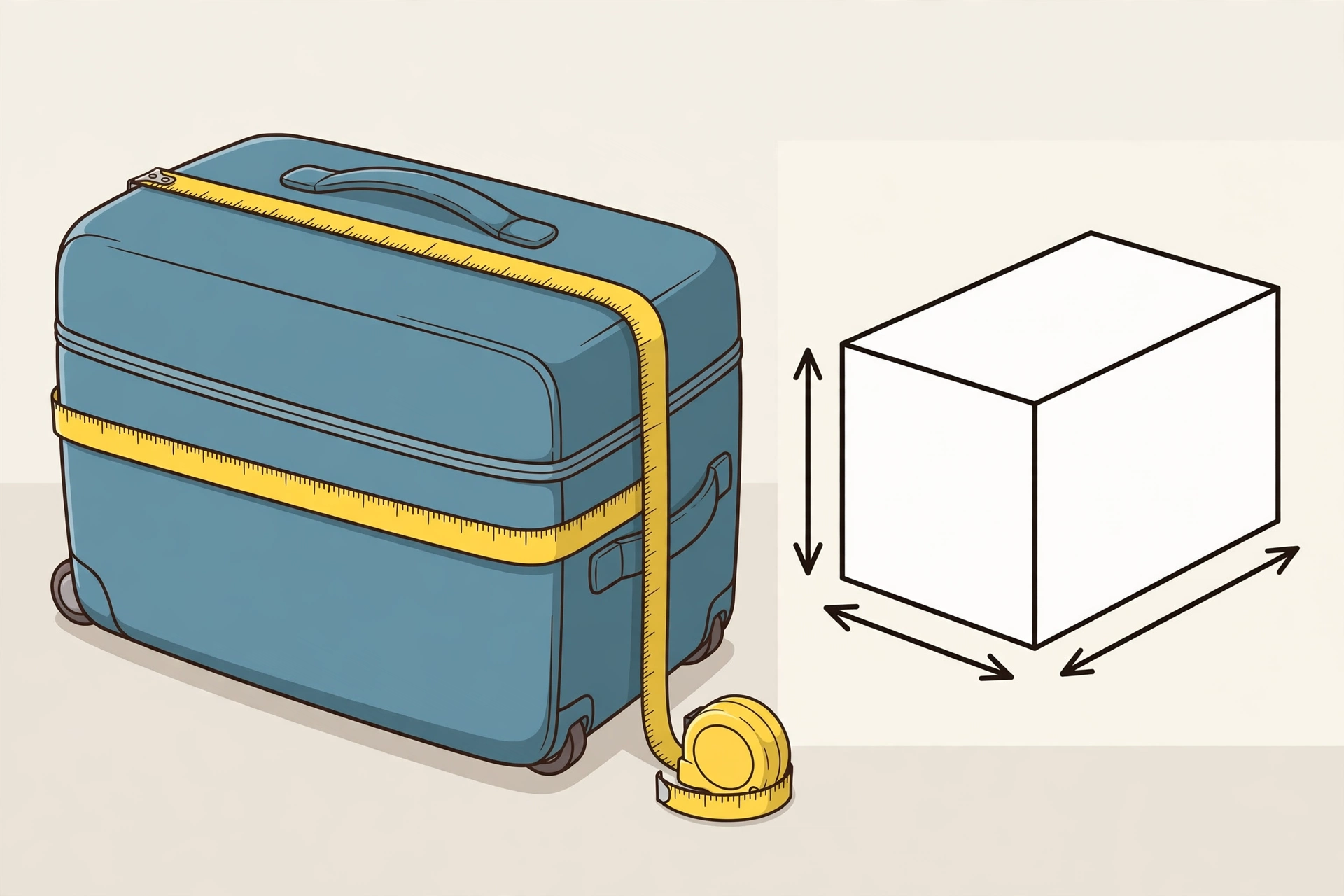
Japan's trains are generous with luggage — up to two pieces per passenger, each up to 30 kg — until one specific rule bites. On the four shinkansen named above (the Tokyo – Nagoya – Kyoto – Osaka – Hiroshima – Fukuoka – Kagoshima corridor), a suitcase whose total dimensions (length + width + height, including wheels and handles) fall in the oversized band must travel in a special space behind a special seat, reserved in advance.
| Total size (L + W + H) | What it means | What to do |
|---|---|---|
| Up to 160 cm | Carry-on or medium suitcase | No reservation needed. Overhead rack (about 42 cm deep), at your feet, or the deck storage area |
| Over 160 cm, up to 250 cm | Large check-in suitcase — many 28–30 inch cases land here | Reserve a "seat with an oversized baggage area" when you book. It costs no more than the same seat without the area |
| Over 250 cm | Bulky freight, not luggage | Cannot be taken on board. Ship it (see below) or split it |
Board with a 161–250 cm bag and no reservation and the conductor charges a ¥1,000 carry-on fee (tax included) and stores the bag where directed — if the train is full, you may be moved to another service. Note one wording trap: JR Central's English page defines oversized as over 160 cm, while the SmartEX booking site phrases the band as starting at "160 cm or more". If your bag measures exactly 160 cm, book the oversized seat anyway — it is free, and it removes the argument.
The general carry-on allowance behind the rule: two pieces per passenger, each up to 30 kg, up to 250 cm in total dimensions and up to 200 cm in length. Some trains also offer a lockable oversized baggage compartment on the deck (fits one piece up to about 80 × 60 × 40 cm), booked with the same kind of seat.
The reservation system applies only on the four shinkansen named above. On the Tohoku, Hokkaido, Hokuriku and Joetsu Shinkansen and on ordinary trains, the 30 kg / 250 cm allowance applies but there is no oversized-bag seat reservation.
Source: JR Central, "Oversized baggage" information — https://global.jr-central.co.jp/en/info/oversized-baggage/ — and the joint JR Central / JR West / JR Kyushu passenger leaflet (accessed 7 Nov 2026).
Option 1: Carry it yourself (free, with the right seat)
Carrying is the default and costs nothing beyond your ticket — the oversized-baggage seat is priced the same as any other reserved seat, and pass holders can reserve it too (a Japan Rail Pass bought on the official site lets you choose it during seat reservation). Choose "seat with an oversized baggage area" in SmartEX, the JR reservation sites, a ticket machine or a ticket office.
Carry it yourself when:
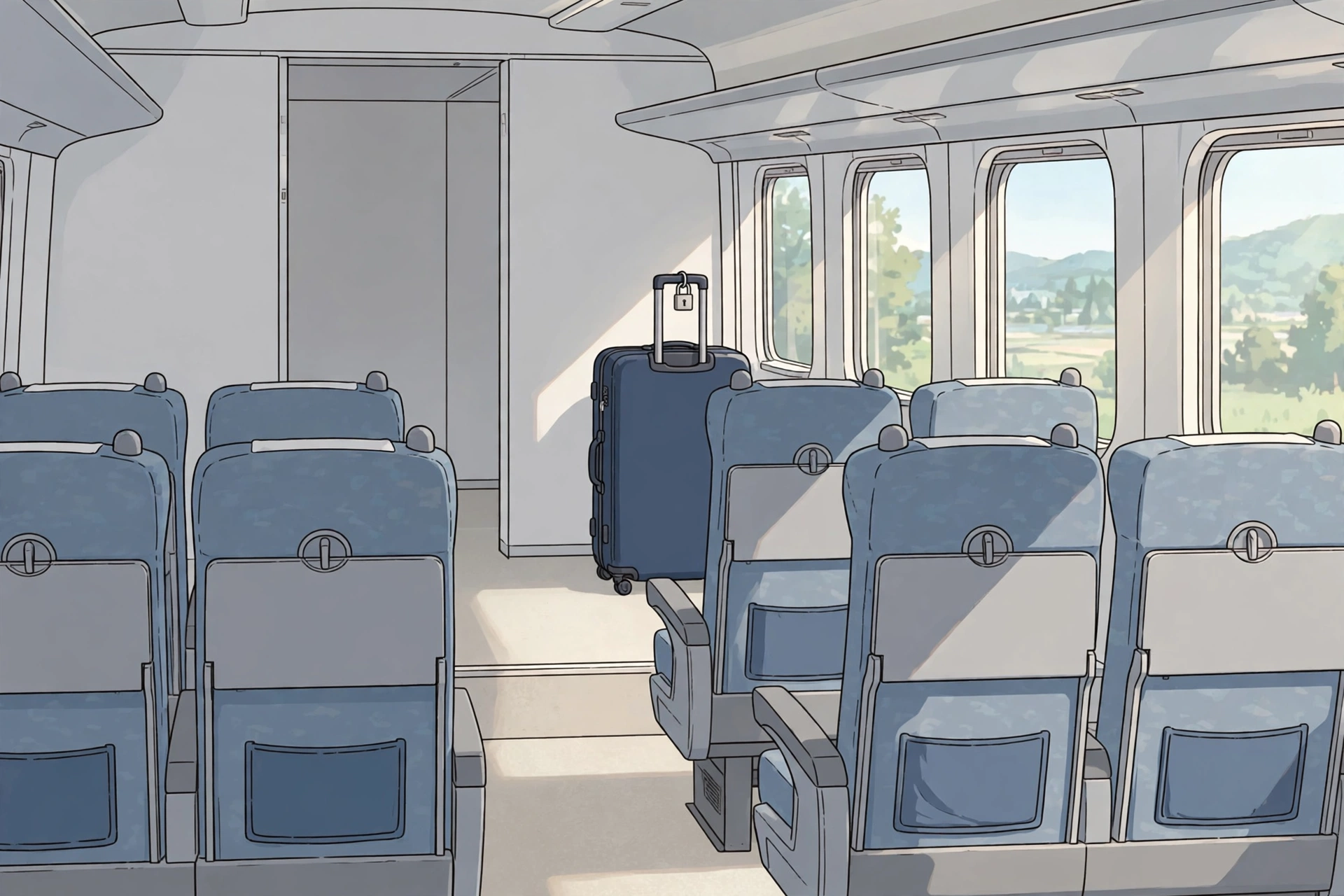
your bag is under 160 cm total, or in the oversized band and the special seats are available on your train, and you can lift the bag into the space behind the last row.
Option 2: Forward it — takkyubin (about ¥2,000–3,200 per bag)
Japan's parcel networks will move a suitcase hotel-to-hotel, station-to-hotel or to the airport, so you travel with a daypack. The best-known is Yamato Transport's TA-Q-BIN (the black-cat logo). Pricing is by size band — the same L + W + H total as the train rule, with a weight cap per band (size 120 ≤ 15 kg, 140 ≤ 20 kg, 160 ≤ 25 kg; whichever of size or weight is higher sets the price). Parcels are accepted up to size 200 / 30 kg.
Yamato's published English rate table gives these one-way, tax-included prices per bag from the Tokyo area (Kanto):
| Size | Tokyo → Kyoto / Osaka (Kansai) | Tokyo → within Kanto |
|---|---|---|
| 120 (≤15 kg) | ¥1,970 | ¥1,850 |
| 140 (≤20 kg) | ¥2,310 | ¥2,190 |
| 160 (≤25 kg) | ¥2,630 | ¥2,510 |
Dropping the bag off yourself at a Yamato office, agent or convenience store takes ¥100 off per parcel. Sending to the airport adds a ¥660 airport handling fee, and airport delivery must be arranged well ahead — plan to send at least two days before your flight, for collection at the airport counter on departure day.
Timing is the catch.
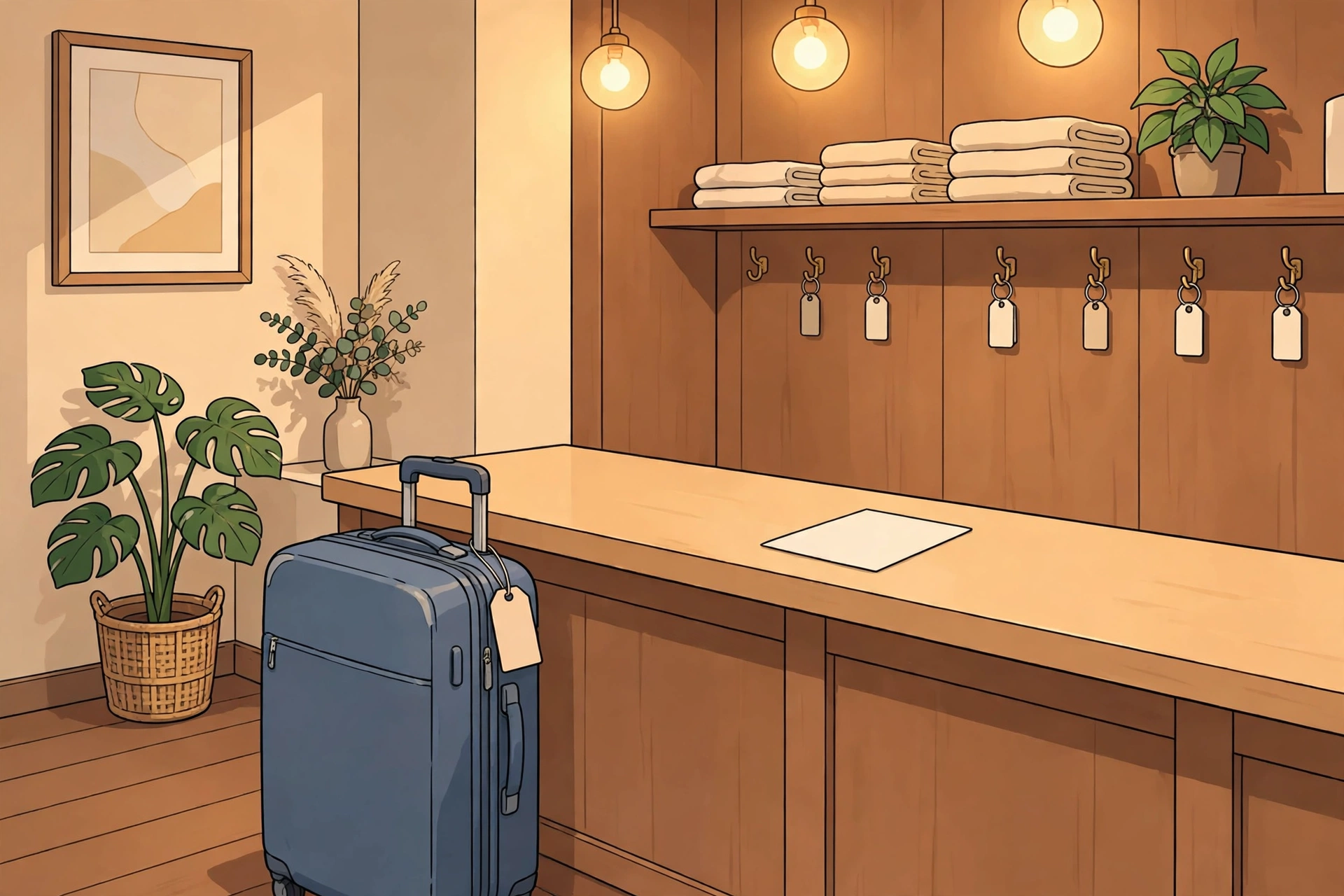
Standard takkyubin between major cities is next-day at best: the bag leaves today and reaches the next hotel tomorrow. Forwarding works when you send the bag the day before you move — hotels handle the paperwork at the front desk. It fails when you need the bag the same evening.
Same-day exists, at a price. JTB's LUGGAGE EXPRESS delivers between hotels/stations on the Tokyo–Kyoto/Osaka corridor the same day; published 2026 prices for a size-160 bag run about ¥13,200 (regular) to ¥16,500 (express) — roughly four to five times the standard takkyubin fare. Worth it only when the alternative is missing the bag entirely.
Luggage forwarding services — booking
Ad — this card contains an affiliate link. See our disclosure.
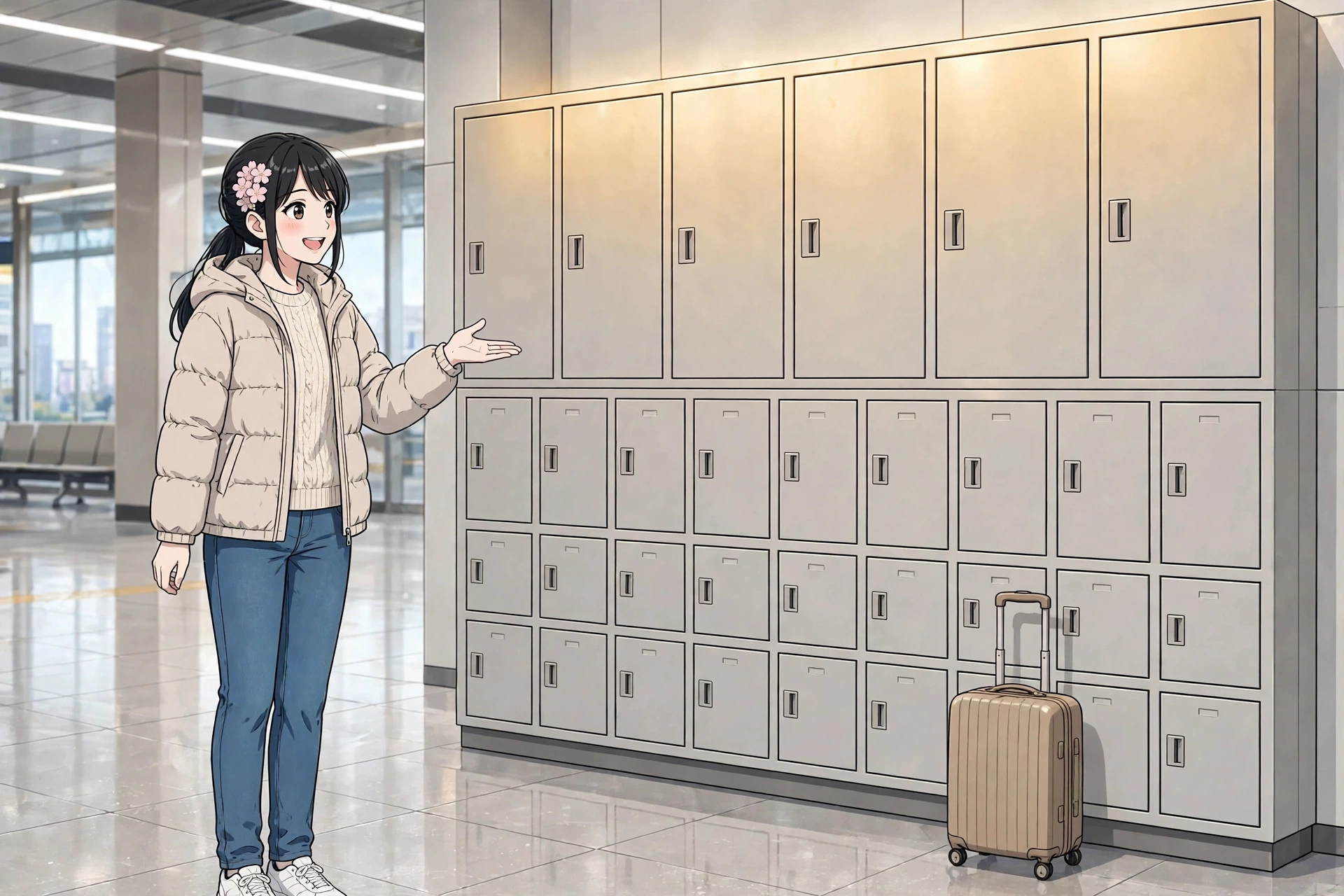
Option 3: Coin lockers (about ¥300–1,000 per day)
Every major station has banks of coin lockers (many now take IC cards like Suica instead of coins). Typical 2026 ranges — the exact fee is always posted on the locker itself, and big-city hubs sit at the higher end:
| Locker | Approx. interior | Fits | Typical price / day |
|---|---|---|---|
| Small | ~35 × 57 × 34 cm | Daypack, shopping bags | ¥300–500 |
| Medium | ~35 × 57 × 57 cm | Carry-on suitcase, large backpack | ¥500–700 |
| Large | ~35 × 57 × 117 cm | One full-size suitcase | ¥600–1,000 |
Three locker rules to know: fees run by calendar day (the counter resets around midnight, so overnight storage is usually two days' fees); most stations cap storage at three days, after which staff remove the contents; and large lockers are scarce — at Tokyo, Kyoto, Shinjuku and Osaka stations they routinely fill up by mid-morning on weekends. Lockers answer the question "where does the bag go for the next six hours?", not "how does it get to my next city?".
Staffed luggage counters and app-based cloak services near stations (look for the Japan Tourism Agency's "Hands-Free Travel" logo) fill the gap when lockers are full, at roughly ¥500–1,000 per bag per day.
Which option when — the decision table
| Situation | Best answer |
|---|---|
| Day of sightseeing between checkout and an evening train | Coin locker (go early for a large one) or a staffed counter |
| Moving hotels tomorrow, bag in the 161–250 cm band, special seats sold out | Takkyubin, sent today |
| Moving hotels tomorrow, happy to lift the bag | Carry it — reserve the oversized-baggage seat |
| Flying home in two days, last hotel in the city | Airport TA-Q-BIN (send ≥2 days ahead, +¥660 fee) |
| Need the bag tonight in the next city, no train space | Same-day LUGGAGE EXPRESS (≈¥13,200–16,500) — or rethink the plan |
| Bag over 250 cm total, or over 30 kg | Not allowed on the shinkansen; standard TA-Q-BIN also caps at size 200 / 30 kg — a specialised mover is required |
FAQ
Does the 160 cm rule apply on all shinkansen? No — only the Tokaido, Sanyo, Kyushu and Nishi-Kyushu Shinkansen. On other shinkansen and ordinary trains the general allowance (2 pieces, ≤30 kg each, ≤250 cm total) applies without a seat reservation for size.
What if I board with a big bag and no reservation? On the covered lines you pay a ¥1,000 carry-on fee (tax included) and the bag is stored where the conductor directs; on a full train you may have to take another service.
How long does hotel-to-hotel forwarding take? Plan on next-day between major cities. Send the bag the day before you move; for airport delivery, send at least two days before the flight.
Planning the train legs themselves? The JR Pass break-even guide shows when a pass beats individual tickets, the shinkansen enjoyment guide covers seats and ekiben, and our Japan eSIM comparison handles the data side of the trip.
Sources and verification
- JR Central — Oversized baggage rules (size bands, ¥1,000 fee, covered lines, allowances). https://global.jr-central.co.jp/en/info/oversized-baggage/ (accessed 7 Nov 2026); JR West mirror: https://www.westjr.co.jp/global/en/howto/baggage/
- Yamato Transport — TA-Q-BIN rates table (English), sizes and weight caps, ¥100 drop-off discount. https://www.kuronekoyamato.co.jp/ytc/en/search/estimate/all_list.html (accessed 7 Nov 2026)
- Yamato Transport — Airport TA-Q-BIN (¥660 airport fee, advance-sending requirement). https://www.kuronekoyamato.co.jp/ytc/en/send/services/airport/ (accessed 7 Nov 2026)
- Japanese cash-tariff cross-checks (Oct 2025 revision) and LUGGAGE EXPRESS same-day prices: Japan-based luggage guides checked 8 Oct – 1 Nov 2026 against Yamato and JTB publications (secondary cross-checks) — see the price-check flag in the text; the two Yamato tariffs could not be reconciled from public pages alone.
- Coin locker size/price ranges: station locker guides compiled from operator-published bands, checked Sep–Oct 2026 (secondary cross-check); ranges are typical, not a single national tariff.
Advertising disclosure. This page contains affiliate links — advertising. If you buy through a link on this site, we may earn a commission, at no extra cost to you. Prices and conditions shown here were checked against the providers' official pages on the dates stated and may have changed since. This site is a research desk: everything here is compiled from publicly available information, not from personal use, and nothing on this page is a personal endorsement based on first-hand experience.
Keep dreaming: once the bag is sorted, ride for the scenery — Scenic rail journeys in Japan.