Train Manners in Japan: The Rules Operators Publish — and the Ones Nobody Announces
Japanese trains run on a shared script written by the railway companies themselves. Learn the lines — phones, queues, priority seats, backpacks — and the quietest trains in the world become the easiest part of the trip.
Advertising disclosure. This page contains affiliate links — advertising. If you buy through a link on this site, we may earn a commission, at no extra cost to you. Prices and conditions shown here were checked against the providers' official pages on the dates stated and may have changed since. This site is a research desk: everything here is compiled from publicly available information, not from personal use, and nothing on this page is a personal endorsement based on first-hand experience.
The short answer
Set your phone to silent and never take a call in the carriage. Queue at the platform markings and let everyone off first.
Take your backpack off in a crowd, give up priority seats instantly, keep your voice down — and save eating for the shinkansen, where it belongs.
Why Japanese trains feel different
Japanese trains are famously quiet, orderly and calm — and that is not an accident of national character. Operators have published and announced the same requests for decades, so regular riders follow a shared script. Visitors who learn the script find the system relaxing; visitors who don't can feel the whole carriage staring. Here are the main points, based on what the railway companies themselves ask of passengers, plus the unwritten conventions that surprise newcomers most.
On the platform
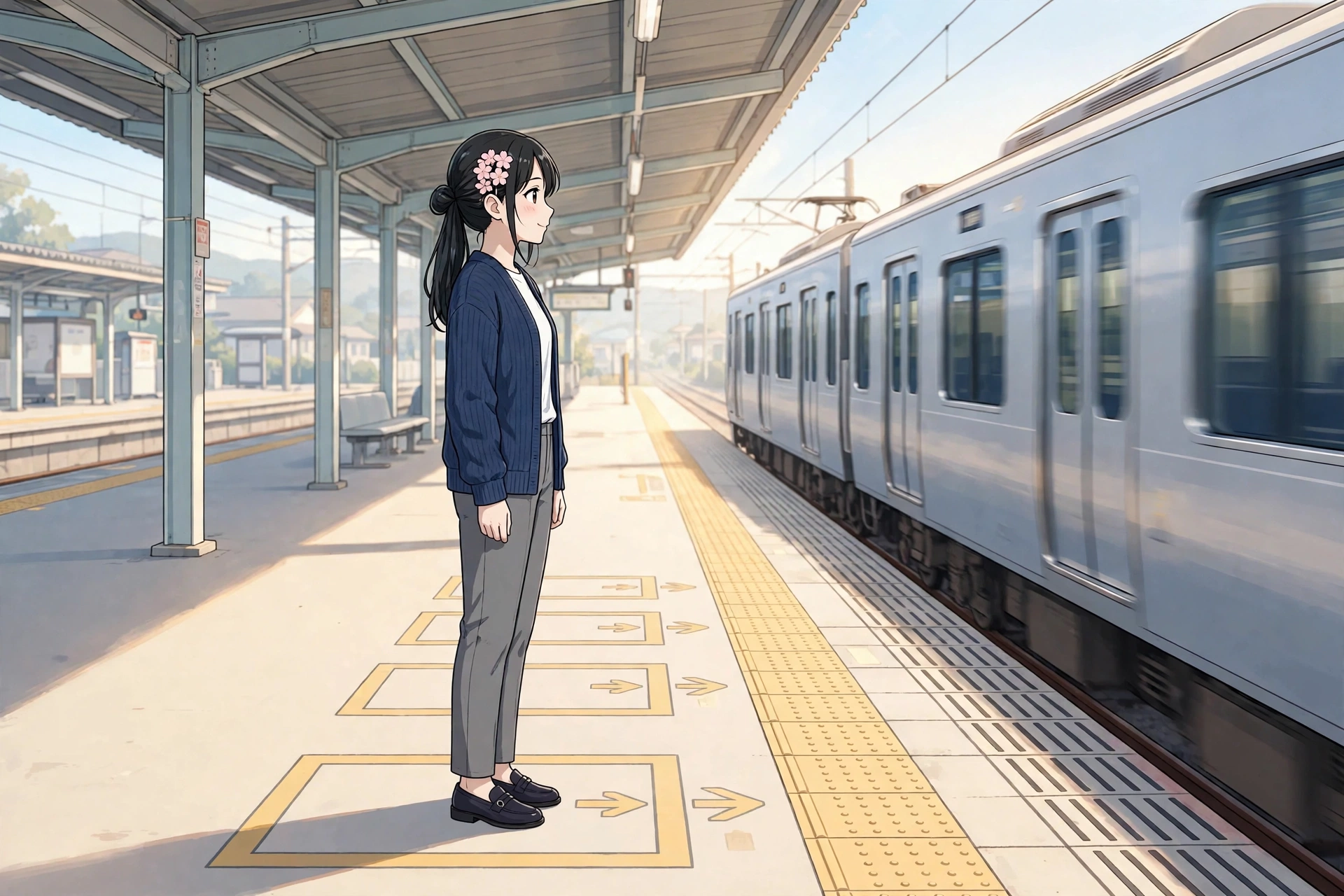
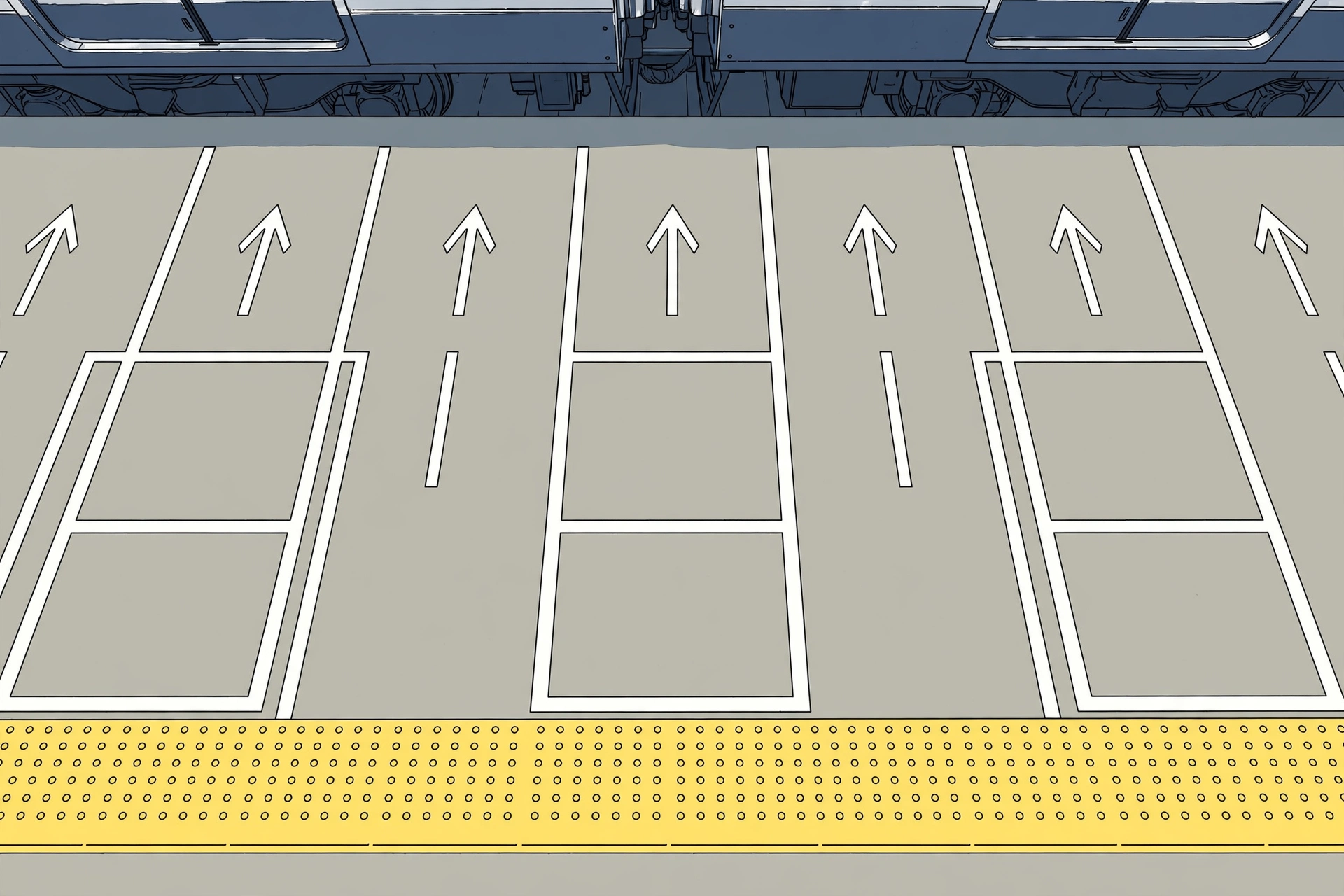
Queue at the markings, and let everyone off first. Platforms are painted with lines and arrows showing where the doors will stop. Passengers wait in files on either side of the door position, leaving a gap in the middle for people getting off. Boarding before the last passenger has stepped down is the single most visibly "wrong" move a visitor can make.
Watch your suitcase and your phone. JR West's official manners guide asks passengers not to use smartphones while walking in the station — it causes collisions and falls — and to take care when walking with a suitcase, which swings wider than you think in a crowd.
Escalator standing side changes by region. In Tokyo and most of eastern Japan people stand on the left and pass on the right; in Osaka the convention is the reverse. The reliable rule is simply to match the people in front of you.
Phones: "manner mode" is the default
The announcement you will hear on almost every train asks you to set your phone to silent ("manner mode") and refrain from making calls on board. JR West states the same in its published guidance: set your phone to silent mode and do not make or accept calls in the carriage.
The detailed shared rule used by JR East and dozens of other operators since 2015 is:
- Near priority seats: switch your phone off when the train is crowded (a legacy of pacemaker-safety caution).
- Everywhere else: silent mode, and no voice calls. Texting, messaging and silent browsing are fine.
If a call really can't wait on a shinkansen, the accepted move is to step into the deck area between cars. On a crowded commuter train, the accepted move is to wait.
Priority seats
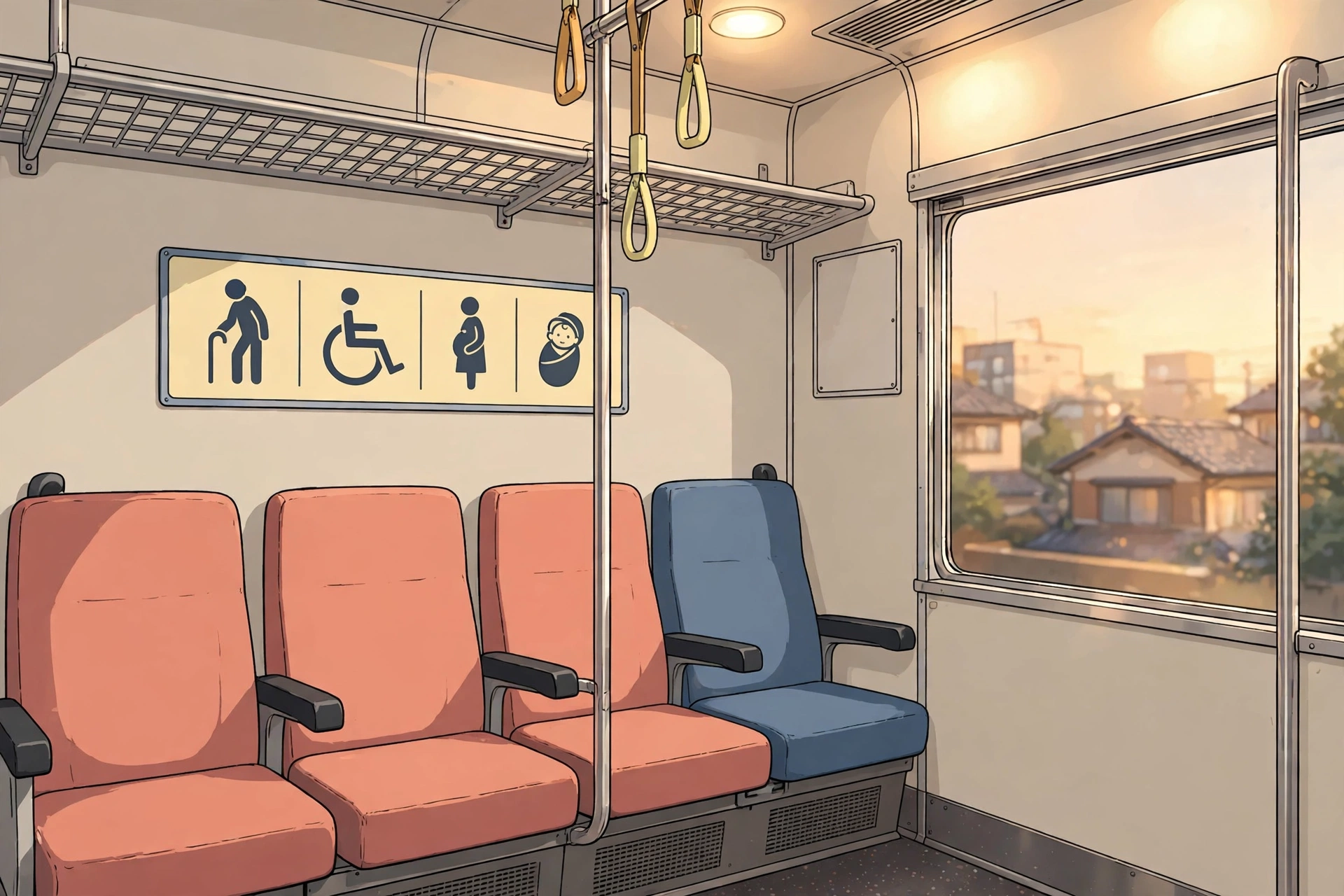
Every car has a block of seats marked "Priority Seat" (優先席), usually near the doors and often in a different colour. They are for elderly passengers, people with disabilities, expectant and nursing mothers, and people travelling with infants — JR West lists the same groups in its guidance.
You may sit in one if it is free. The obligation is to give it up immediately and without being asked when someone who needs it boards — and to stay alert enough to notice, which is why sleeping or staring at a phone in a priority seat draws disapproval.
Sound, conversation and food
Keep your voice down. Operators explicitly ask passengers to refrain from speaking loudly or shouting, and to keep conversations quiet. Group chatter that would be normal in many countries reads as loud in a Japanese carriage. Music leaking from headphones is part of the same picture — keep the volume low enough that your neighbour can't follow the song.
Eating depends on the train. On commuter trains, eating is broadly avoided (a sealed drink is fine). On shinkansen and limited-express trains, eating is not merely allowed but part of the culture — the ekiben station bento exists for exactly this. See our guide to enjoying the shinkansen: ekiben, Mt Fuji seats and the art of the ride. Strong-smelling food is unwelcome on any train.
Bags, backpacks and space
- Take your backpack off in a crowded car
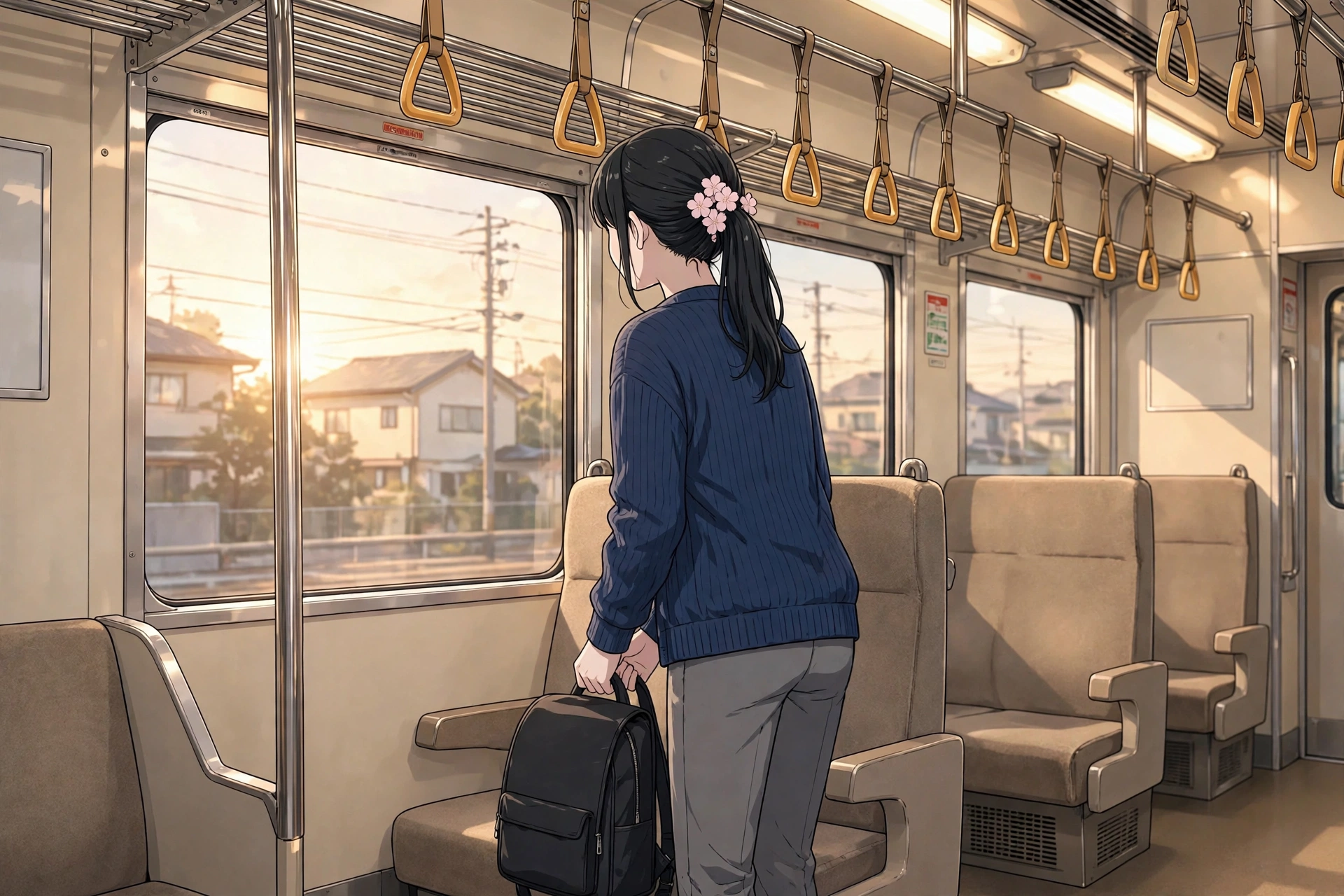
and hold it in front of you or between your feet. A pack worn on the back takes up a second person's space and swings into strangers at every stop.
- Never block the doors with luggage. JR West's guidance is explicit: the area around the doors should not be used to store suitcases, so passengers can get on and off easily.
- A seat is for a person, not a bag. Putting luggage on the seat beside you in a busy car is one of the fastest ways to attract a conductor's attention.
- On shinkansen, big suitcases have their own rule — total dimensions over 160 cm need a reserved seat with an oversized baggage area. Our luggage guide explains the rule and the alternatives.
The shinkansen extras
Long-distance trains add a few conventions of their own:
- Recline politely. Before reclining your seat, a glance back or a brief "sumimasen" to the passenger behind is the custom — and bring the seat back upright before leaving the train.
- Queue for non-reserved cars on the platform markings, same as anywhere else; the car and door positions are displayed on the platform signs.
- Take your rubbish with you to the bins near the doors or on the platform; there is no bin at your seat.
- Stow luggage in the racks or the space behind the last row of your car (if you reserved it) — wheels and handles are included in the size rules.
A one-minute checklist
- Phone on silent before you board; no calls in the carriage.
- Queue at the platform markings; let everyone off first.
- Backpack off and held in front in a crowd.
- Priority seats: sit only if free, give up instantly, stay aware.
- Voice low, headphones low.
- Food on the shinkansen: yes (that's what ekiben are for). Food on the commuter train: no.
- Luggage out of the doorway, off the seats, and — over 160 cm total — in a reserved oversized baggage area.
None of this is enforced by fines; it is enforced by everyone around you doing it. Match the carriage, and Japan's trains become the easiest part of the trip.
FAQ
Can I talk on the phone if I whisper? No — the operators' request is no calls in the carriage at all. Text instead, or step into the deck area between cars on a shinkansen.
Can I sit in a priority seat if the train is empty? Yes, if it is free — but you must give it up immediately when someone who needs it boards, and stay aware enough to notice them.
Is eating really banned on local trains? Not by law, but by convention: eating is broadly avoided on commuter trains. On shinkansen and limited expresses it is expected — that is what ekiben are for.
Plan the trip around the manners
Paying for the trains comes first: our JR Pass break-even guide shows when a pass beats individual tickets, and our Japan eSIM comparison covers staying connected between stations.
Sources and verification
- JR West — "Train and Station Manners" (official): silent mode and no calls on board; refrain from loud speech; priority seats and who they are for; keep door areas clear of suitcases; care with smartphones while walking and with suitcases. https://www.westjr.co.jp/travel-information/en/train-usage-guide/howto/manners/ (accessed 7 Nov 2026)
- JR East FAQ on the joint phone rule shared by 37 railway companies (in force 1 Oct 2015): phones off near priority seats when crowded; silent mode and no calls elsewhere (summarised from the operator's published FAQ, checked Oct 2026).
- Regional escalator convention and general conventions: widely published visitor guidance; the standing side varies locally, so this article advises matching nearby passengers.
Advertising disclosure. This page contains affiliate links — advertising. If you buy through a link on this site, we may earn a commission, at no extra cost to you. Prices and conditions shown here were checked against the providers' official pages on the dates stated and may have changed since. This site is a research desk: everything here is compiled from publicly available information, not from personal use, and nothing on this page is a personal endorsement based on first-hand experience.
Keep dreaming: manners get you on the train; the view is the reward — Scenic rail journeys in Japan.